Kid-safe tech toys tested to ASTM F963 · CPSIA · EN71 · FCC — trusted by leading US retailers
0%

Choosing the right Kids Smartwatch for wholesale buyers in 2026 requires more than comparing colorful screens and low unit prices. Retailers must examine real-world performance, child-friendly design, supplier reliability, and long-term customer value. A watch that looks attractive in a product catalog may disappoint when its battery lasts only one school day.

Avi Greengart, a respected consumer technology analyst and president of Techsponential, has often highlighted a simple wearable principle: “The best wearable is the one you’ll actually wear.” This idea matters greatly in the Kids Smartwatch market. Children need comfortable straps, clear displays, simple controls, and dependable location features. Parents expect secure communication, sensible privacy practices, and consistent software support. Wholesale buyers also need stable inventory, transparent warranties, responsive service, and packaging that works across different retail channels.

Small details matter. A smooth charging dock can prevent daily frustration. A strong strap may reduce returns. Clear parental controls can build trust before the first sale. However, no supplier scorecard is perfect. Field testing remains essential. Test several units with different children, inspect call quality in busy streets, and measure battery life under normal use. Do not trust impressive specifications alone.

This 2026 guide will compare the most practical Kids Smartwatch options for wholesale purchasing. It will consider pricing, features, durability, certifications, after-sales support, and market fit. Some recommendations may change by region and customer age. That is worth acknowledging. The best wholesale choice is not always the cheapest model, but the one that performs reliably after it reaches real families.
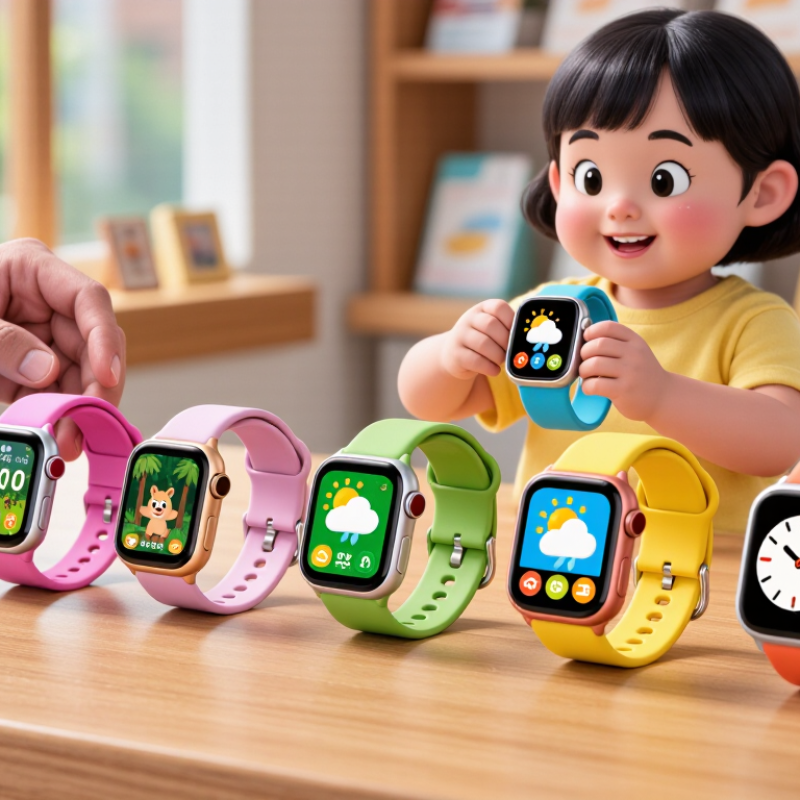
2026 Best Kids Smartwatch for Wholesale Buyers?

What Is a Kids Smartwatch and Why Does It Matter for Wholesale Buyers?

A kids smartwatch is a wearable communication and safety device designed for children. It may include calling, location sharing, step tracking, reminders, and emergency alerts. Unlike a basic watch, it connects a child, caregiver, and mobile network in one small device.

This category matters for wholesale buyers because demand depends on trust, not appearance alone. GSMA’s Mobile Economy 2025 reports 4.7 billion mobile internet users worldwide in 2024. That expanding connected population supports demand for simpler, child-focused devices. ABI Research also identifies wearables as an important growth area for personal tracking and connected services. However, market growth does not guarantee easy sales.

Wholesale buyers should inspect practical details before approving large orders. Test location accuracy near buildings, schools, and underground areas. Check battery performance after calls, tracking, and screen use. Network compatibility is essential. A watch that works in one country may fail after importation. Data handling also needs careful review, including parental controls, account security, and clear consent procedures.

Small details often decide repeat orders. A soft strap, readable icons, and a loud speaker matter more than decorative packaging. Parents may also expect reliable charging contacts and simple setup instructions. Some suppliers promise too much. That deserves skepticism. Buyers should request sample testing, failure-rate records, warranty terms, and independent compliance documents before committing. The perfect device probably does not exist, but a transparent supplier can still reduce costly surprises.

Which Features Define the Best Kids Smartwatch in 2026?

The best kids smartwatch in 2026 will be defined by practical safety, not a crowded app menu. A reliable location system should update quickly near schools, parks, and busy streets. Two-way calling must remain clear in noisy outdoor spaces. A battery lasting two full school days is more useful than decorative functions.

IDC’s Worldwide Quarterly Wearable Device Tracker reported 537 million wearable shipments in 2024, with annual growth above 11%. This wider market signals strong demand, but it does not prove every children’s model is dependable. Wholesale buyers should request test results for location accuracy, call quality, battery life, and water resistance. Real-world testing matters. Laboratory claims can look better than daily use.

Tips: Check whether the watch supports controlled contacts, emergency calling, and adjustable location sharing. Review privacy settings carefully. Data minimization, parental consent, and clear deletion controls should be visible before purchase. GSMA’s Mobile Economy 2025 highlights continued expansion of connected devices, yet connectivity costs and coverage still vary by region. Buyers should confirm network compatibility before placing large orders. A simple interface is also essential for younger users. I would not treat more features as automatic value; confusing menus can create avoidable mistakes. Suppliers should provide manuals, warranty terms, replacement procedures, and sample units for independent inspection.

2026 Best Kids Smartwatch for Wholesale Buyers

Which features define the best kids smartwatch in 2026?

This 100-point wholesale evaluation framework prioritizes child safety, dependable location services, battery endurance, durability, privacy protection, and ease of use. Products with reliable 4G connectivity, GPS support, emergency calling, water resistance, parental controls, and clear privacy safeguards are better positioned for the 2026 market.

How to Compare Safety, Connectivity, Battery Life, and Durability

2026 Best Kids Smartwatch for Wholesale Buyers?

Safety should lead the comparison, not colorful screens. Require guardian-controlled contacts, precise location sharing, SOS alerts, and encrypted data transmission. Independent security testing matters more than promotional claims. GSMA Intelligence’s Mobile Economy 2025 estimates 5.8 billion unique mobile subscribers worldwide. That scale increases the importance of secure account management and dependable roaming. Ask suppliers how quickly they patch vulnerabilities. Also ask where children’s location data is stored.

Connectivity needs real field testing. Ericsson’s Mobility Report, November 2024, recorded 2.3 billion 5G subscriptions globally by the end of 2024. However, network coverage still differs sharply between cities, schools, and rural areas. Test LTE calling, GPS accuracy, indoor positioning, and emergency alerts with several network operators. Wi-Fi alone is insufficient for outdoor safety. A cheap data plan can become expensive after roaming fees.

Battery claims deserve skepticism. Measure runtime with GPS, calls, notifications, and screen use enabled. UL Solutions’ battery safety guidance highlights protection against overcharge, overheating, and short circuits. Prefer certified cells and clear charging instructions. For durability, verify an IP rating under IEC 60529, then test drops, sweat, dust, and loose straps. IP67 is useful, but it does not guarantee long-term abuse resistance. In my procurement reviews, advertised battery life often feels optimistic. That is a small but costly weakness. A pilot batch, replacement-rate tracking, and written warranty terms reveal more than a polished sample.

What Should Wholesale Buyers Check in Suppliers, Pricing, and Compliance?

Choosing a kids smartwatch for wholesale requires more than comparing unit prices. A capable supplier should provide clear factory information, production records, and recent quality certificates. Ask for a working sample from the same production line, not a showroom model. Check call quality, GPS response, battery endurance, strap strength, and screen visibility indoors and outdoors. Small details matter. A loose charging pin can create costly returns.

Pricing should reflect the real landed cost. Request separate figures for the device, packaging, software access, shipping, tooling, and replacement parts. Confirm minimum order quantities and payment terms in writing. A low quotation may exclude firmware updates, warranty handling, or customs-related charges. Ask how the supplier manages defective units and late deliveries. Test a small batch before committing to a large order. It may slow the launch, but it exposes problems earlier.

Compliance needs careful, destination-specific checking. Request test reports covering radio equipment, electrical safety, battery transport, materials, and child-use requirements. Verify that each document matches the exact model and current hardware version. Smartwatches may process location, voice, or contact information, so review privacy controls, data storage, parental consent features, and deletion procedures. Do not rely on copied certificates. An independent laboratory or local compliance adviser can confirm gaps. We have seen promising samples fail after packaging changes or software updates. That risk is easy to underestimate. Supplier audits, traceable production lots, and documented corrective actions provide stronger evidence than polished sales presentations.

How to Choose the Right Kids Smartwatch for Different Retail Markets

Choosing the right kids smartwatch begins with the retail market, not the product catalog. A premium urban market may accept GPS, video calling, and learning tools. Price-sensitive markets may value a bright display, simple controls, and long battery life. Grand View Research estimates the global smartwatch market reached about USD 33.6 billion in 2023. Growth looks attractive, but children’s products need tighter testing. GSMA reported 4.6 billion mobile internet users in 2023, covering 57% of the world’s population. This gap matters. Some regions still need reliable cellular coverage, while others expect app-based features.

Wholesale buyers should compare age suitability, language support, charging design, and network compatibility. A preschool model should use large icons and limited menus. An older-child model may need location sharing and school-time controls. However, GPS accuracy can weaken indoors, and battery claims often fall short in cold weather. That is an uncomfortable detail, but it affects returns. Retailers should request regional samples before placing a large order. Check screen brightness under store lighting. Test charging ports with small hands nearby. Review privacy settings and local data requirements with qualified advisers.

Tips: Build separate product bundles for each market. Offer basic, mid-range, and connected versions. Ask for independent test reports, not only factory claims. Track return reasons for eight weeks. A low return rate is useful evidence, but it is not proof of long-term quality. Recheck firmware stability after updates. Wholesale decisions should stay flexible. The first forecast may be wrong.

FAQS

What is a kids smartwatch?

It is a wearable device for child communication and safety. It may support calling, location sharing, reminders, and emergency alerts. It connects children, caregivers, and mobile networks in one compact device.

Why does this product matter to wholesale buyers?

Demand depends on trust, not appearance alone. Parents expect dependable calling, location updates, and simple controls. Attractive packaging cannot repair poor battery performance or weak network coverage.

Which features should buyers prioritize?

Prioritize accurate location updates, clear two-way calling, and strong battery life. Controlled contacts and emergency calling are also important. A readable screen helps children use the device independently.Keep it simple.

How should buyers test a sample device?

Test it near buildings, schools, parks, and underground areas. Check location response, call clarity, charging contacts, and screen visibility. Use the device outdoors and indoors before approving a large order.A laboratory claim is not enough.

How long should the battery last?

A practical target is two full school days. Test battery life after calls, location updates, screen use, and standby time. Results may change with network strength and software settings.Real use exposes weaknesses.

What network and software details require checking?

Confirm network compatibility for every destination country. A device working in one region may fail after importation. Review software access, update procedures, account security, and setup instructions.Do not assume compatibility.

How can buyers evaluate supplier pricing?

Request separate costs for the device, packaging, software access, shipping, tooling, and replacement parts. Confirm order quantities and payment terms in writing. A low quote may exclude updates, warranty handling, or customs charges.The final cost can surprise you.

What compliance and privacy documents should suppliers provide?

Request documents covering radio equipment, electrical safety, batteries, materials, and child-use requirements. Confirm that each document matches the exact model and hardware version. Review location data, voice information, parental consent, storage, and deletion controls.Copied documents deserve skepticism.

What supplier warning signs should buyers notice?

Be cautious when suppliers avoid sample testing, failure records, warranty terms, or production details. Packaging changes and software updates can create new defects. Traceable production lots and corrective-action records offer stronger evidence.The perfect device probably does not exist.

Conclusion

The best Kids Smartwatch for wholesale buyers in 2026 should combine child-friendly design, dependable communication, location awareness, and practical daily functions. Key features may include calling, messaging, GPS or location support, emergency contacts, parental controls, activity tracking, water resistance, and an easy-to-use interface. Buyers should compare products carefully by examining safety settings, network connectivity, battery performance, charging convenience, screen quality, materials, and resistance to everyday wear. A reliable device must provide stable performance without unnecessary complexity for children or parents.

Wholesale buyers should also evaluate suppliers through product consistency, sample testing, production capacity, warranty support, packaging options, and transparent pricing. Compliance documentation, data protection practices, age-appropriate design, and regional connectivity requirements are essential before placing an order. Finally, product selection should match each retail market: entry-level models may suit price-sensitive customers, while advanced versions can target families seeking stronger safety tools, longer battery life, and more durable construction. This balanced approach helps buyers choose products that are competitive, practical, and suitable for different customer needs.

Vivienne

Vivienne

Vivienne is a dedicated marketing professional with a strong understanding of the company’s products, market trends, and customer needs. With a background in strategic communication and product-focused content development, she regularly contributes insightful articles to the company’s professional......