Choosing the best Kids Walkie Talkies is not simply about finding the brightest color or longest advertised range. A reliable choice should match a child’s age, hand size, confidence, and daily environment. In a backyard, clear audio may matter more than extreme distance. During camping trips, battery life, weather resistance, and easy controls become more important. Parents should examine the push-to-talk button, speaker volume, channel selection, charging method, and emergency-friendly features. Keep it simple.
Real-world testing often reveals details that product descriptions miss. Can a child press the buttons without help? Does the speaker remain understandable near traffic, trees, or a busy playground? Are the controls confusing in low light? These questions deserve practical attention. A careful comparison should also review manufacturer instructions, included accessories, warranty information, and independent customer feedback. Avoid trusting impressive range claims without considering buildings, hills, and interference. They can be optimistic.
Safety should guide every recommendation. Children need reminders not to share private information over open channels and to stay within agreed boundaries. Parents should test the devices before a trip, label each unit, and carry backup communication when necessary. I might value a rugged design too highly, while overlooking comfort for smaller hands. That is an easy mistake. The best Kids Walkie Talkies are not necessarily the most expensive models; they are dependable, understandable, and suitable for the child using them. This guide compares practical features, common weaknesses, and realistic buying considerations, helping families choose with greater confidence.
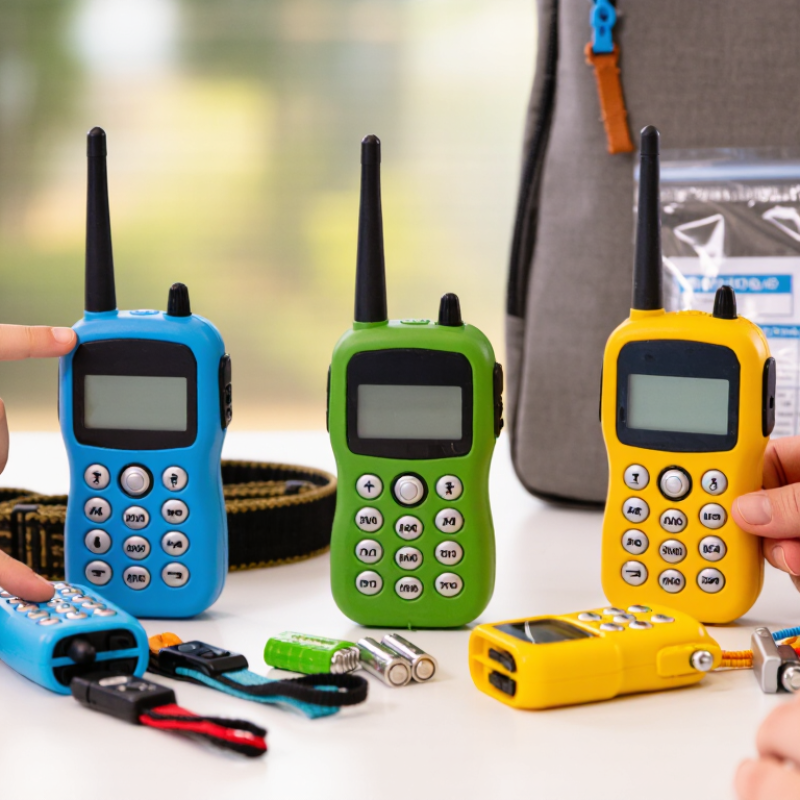
Choosing kids’ walkie talkies starts with the child’s environment, not the advertised range. Walls, trees, and hills quickly weaken radio signals. Test the units inside your home and across the yard before relying on them outdoors. Shared channels also mean nearby users may hear conversations. Avoid models that suggest privacy without clear technical evidence.
Sound safety deserves careful attention. The WHO and ITU Global Standard for Safe Listening recommends a maximum average level of 75 decibels for children. Choose adjustable volume and place the speaker slightly away from the ear. Check the battery compartment for secure screws and inspect the charging cable regularly. The U.S. Consumer Product Safety Commission’s annual toy injury reports show why age-appropriate design and supervision still matter. Small accessories can become hazards. Simple is often safer.
Tips: Select large buttons, visible channel numbers, and a lightweight body. Test the push-to-talk button with small hands. Rechargeable batteries reduce waste, but removable batteries are easier to replace. Read the manual’s operating limits. I would not trust a “maximum range” number alone; it is usually measured in open conditions. A perfect range claim is a trap. Look for compliance information from recognized safety authorities, and reconsider models with unclear instructions or unusually loud speakers.
Choosing the best kids’ walkie-talkies requires more than reading the advertised range. Manufacturers usually measure range in open fields with minimal interference. Indoors, walls, trees, and nearby electronics can reduce that distance sharply. That number can disappoint. For home use, a reliable 500-meter connection may matter more than an impressive outdoor claim. Test the devices between bedrooms, a garden, and a nearby corner before deciding.
Signal quality is equally important. Clear voices help children communicate without repeating every message. Listen for crackling, delayed audio, or sudden volume drops. Some models include multiple channels, but extra channels do not always mean better communication. Busy areas can create interference, especially near buildings or public events. A practical check is simple: let one child walk behind a wall while another speaks normally. If the voice becomes unclear quickly, the stated range is less useful.
Battery life should match the child’s habits. A unit used for weekend play may need only several hours, while camping trips require much longer endurance. Compare continuous-use time, standby time, charging speed, and battery replacement options. Rechargeable batteries are convenient, but they can lose capacity over time. I would not trust a single laboratory figure. Real use includes forgotten charging, cold weather, and children leaving the device switched on.
Safety starts with sound, not advertised range. The WHO-ITU Global Standard for Safe Listening recommends limiting children’s average exposure to 75 decibels over 40 hours weekly. Choose walkie talkies with adjustable volume and a dependable volume ceiling. Test them indoors, where voices can sound sharp against walls. A clear speaker matters more than extreme loudness. Keep the units away from sleeping children, too.
Physical design deserves equal attention. The U.S. Consumer Product Safety Commission estimated 198,100 toy-related emergency-room injuries among children under 15 in 2022. Walkie talkies are not responsible for all these injuries, but the figure supports careful checks for loose battery covers, detachable parts, and sharp edges. Look for screw-secured battery compartments, rounded corners, and materials tested against recognized toy-safety standards, such as ASTM F963 or EN 71. Certification claims still need verification.
Drop resistance helps, but vague claims are not enough. Check whether the product states a tested drop height, water-resistance rating, or impact standard. A practical test is simple: inspect the battery door after a short fall onto a carpeted floor. I would not repeat this on concrete. Also check glove-friendly buttons, a strong belt clip, and a low-battery alert. Claimed range can shrink between buildings, trees, and hills. That limitation is easy to overlook. Include adult supervision, because no radio can replace it.
Size affects comfort more than many buyers expect. A compact walkie talkie should fit securely in a child’s hand, even outdoors. Oversized units may slip during play or feel heavy after ten minutes. Check the grip, belt clip, and antenna before buying. Rounded edges also reduce discomfort when children carry them in pockets. I used to assume smaller always meant better, but tiny buttons can create new problems.
Controls should be simple and easy to identify by touch. A large push-to-talk button helps children speak without searching. Volume controls need clear feedback, especially in noisy parks. Avoid menus that require several steps. Children may forget complicated instructions quickly. Test the buttons while wearing light gloves. That small detail can reveal poor design.
Tips:
Ask a child to hold the device and change the volume. Watch whether they can do it without help. Listen for clear speech at both close and moderate distances. A loud speaker is not automatically a clear speaker. Check whether voices remain understandable near traffic or strong wind. Shorter antennas may look safer, but performance still depends on local conditions and obstacles. Read independent testing when available, and remember that real use may differ from a product description.
A child’s age should guide the radio’s size, controls, and safety features. For preschoolers, choose large buttons, simple channels, and a secure battery compartment. Follow the manufacturer’s age label carefully. Small removable parts can create hazards. For children aged six and above, clearer displays and private-call functions may be useful. Pew Research Center’s 2024 Teens, Social Media and Technology report found that 95% of U.S. teens have smartphone access. A simple walkie talkie can offer screen-free coordination, but younger children may still need supervision. Keep it simple.
Match the device to the activity. For backyard play, a short-range pair with a belt clip may be enough. Camping requires stronger weather resistance, readable screens, and dependable battery life. Walls, trees, hills, and cold weather reduce practical range. The FCC’s 47 CFR Part 95 rules define technical requirements for personal radio services, including power limits. Check local radio rules before purchase. Range claims often describe open, unobstructed conditions.
Budget decisions should include batteries, chargers, and replacement costs. Basic models suit occasional play and short distances. Mid-range units may add rechargeable batteries, better audio, and stronger casing. Premium features are not always necessary. Review independent testing, warranty terms, and battery safety information before paying more. The U.S. Consumer Product Safety Commission repeatedly emphasizes safe battery use and secure compartments in children’s products. My less comfortable advice is to question flashy specifications. A cheaper, simpler radio may work better when children drop it, lose it, or forget to charge it.
Match the walkie-talkie to the child’s age, planned activities, and budget. Younger children benefit most from simple controls and lightweight designs, while older children may value longer range, stronger durability, and extra features.
The percentages show practical buying priorities for each age group, rather than measurements of any specific product. Actual range depends on terrain, buildings, local regulations, and the device’s power limitations.
Start with the child’s environment, not the advertised range. Walls, trees, and hills weaken signals quickly. Test them at home.
Choose adjustable volume and a dependable volume limit. A global safe-listening guideline recommends 75 decibels for children’s average exposure. Keep speakers slightly away from ears.
Usually, shared channels are not private. Nearby users may hear conversations. Avoid unclear privacy claims without technical evidence.
Look for rounded corners, large buttons, and screw-secured battery covers. Check for loose parts and sharp edges. Simple is often safer.
Preschoolers need large controls, simple channels, and secure battery compartments. Older children may use clearer displays. Follow the stated age label carefully.
Backyard play may need only short-range units and belt clips. Camping requires weather resistance, readable screens, and reliable battery life. Cold weather can reduce range.
Treat maximum range as an open-field estimate. Test the units between rooms, across a yard, and near trees. Perfect range claims deserve doubt.
Rechargeable batteries reduce waste, while removable ones simplify replacement. Check charging cables and low-battery alerts. After a small carpeted drop, inspect the battery door.
Not necessarily. Compare audio quality, casing strength, warranty terms, and battery safety. A cheaper, simpler radio may survive real childhood use better.
Yes. Radio features cannot replace supervision. Watch younger children around small accessories, batteries, and charging cables. I would not test drops on concrete.
Choosing the best Kids Walkie Talkies starts with understanding how and where they will be used. Consider the child’s age, communication needs, and typical activities, such as family outings, camping, neighborhood play, or indoor games. Compare communication range, signal clarity, and battery life, remembering that real-world performance can vary depending on buildings, trees, and other obstacles. A reliable model should provide clear audio and enough battery power for the planned activity.
Safety and durability are also important. Look for sturdy construction, comfortable sizing, simple controls, secure battery compartments, and volume levels that are easy for children to manage. Lightweight designs with large, clearly labeled buttons can make operation easier for younger users. Finally, match the features to the child’s experience and your budget. Younger children may need basic controls and simple functions, while older children may appreciate longer range, improved audio, and extra convenience features. The best choice balances usability, safety, durability, performance, and value.