Choosing reliable suppliers for Wireless Kids Headphones requires more than comparing logos, prices, and product photos. This guide examines ten leading Chinese suppliers through practical purchasing criteria. These include volume-limiting performance, Bluetooth stability, comfort, battery safety, material quality, and production consistency. It also considers factory experience, export records, testing documentation, customization ability, and after-sales support. A supplier may offer bright colors and attractive packaging, yet still lack dependable acoustic control.
Pediatric audiologist Brian Fligor has emphasized, “It’s not the device, it’s the dose.” This principle matters when evaluating children’s headphones. A comfortable headset should not encourage unsafe listening habits. Buyers should check whether volume limits remain effective across phones, tablets, and computers. They should also inspect ear-cup pressure, hinge strength, charging ports, and microphone clarity. Small details matter. A loose hinge can become a return problem.
The suppliers discussed here serve different buyer needs. Some focus on private-label orders, while others support established consumer brands. Their manufacturing strengths may differ in tooling, quality control, packaging, or delivery speed. Rankings can change as certifications, pricing, and factory capabilities change. Public supplier information is also incomplete sometimes. That limitation deserves attention. Therefore, this list should support supplier screening, not replace factory audits, sample testing, or independent compliance verification. With careful comparison, importers, retailers, and education-focused buyers can identify Wireless Kids Headphones partners that balance child-friendly design, dependable performance, and responsible production.
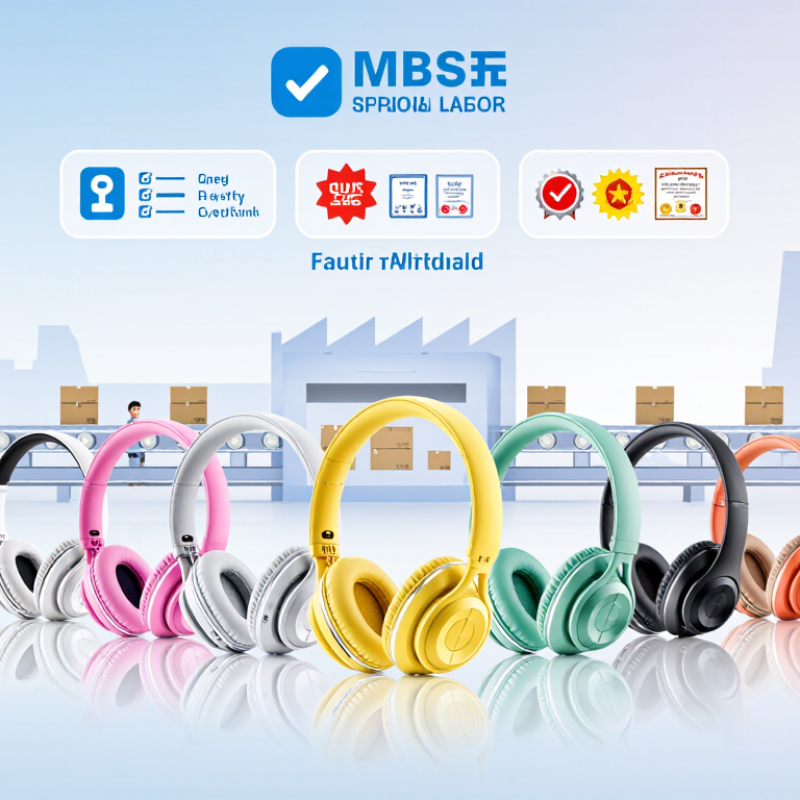
How China’s Top Wireless Kids’ Headphone Suppliers Are Evaluated
China’s top wireless kids’ headphone suppliers are evaluated through more than product photos and low quotations. Experienced buyers inspect samples, factory processes, and child-friendly design details. They check soft ear cushions, adjustable headbands, stable Bluetooth performance, and clear volume-limiting controls. A strong supplier should provide consistent sound, safe materials, battery test records, and traceable quality reports. Small details matter, such as buttons that a child can press easily and hinges that do not pinch fingers.
Supplier reliability also depends on production experience. Buyers should review factory audits, sample approval procedures, defect rates, delivery records, and after-sales communication. A professional supplier explains testing methods instead of making vague safety claims. Independent laboratory reports can strengthen credibility, especially when they match the actual production model. Still, no supplier is flawless. Some factories present excellent samples but struggle with large orders. That gap needs careful checking.
Tips: Request several samples from different batches, not only one unit. Test connection stability through walls, battery duration, charging temperature, and comfort after thirty minutes. Ask for a written quality-control plan and replacement policy. Verify whether the supplier can maintain the same materials and components during mass production. A factory visit or live video inspection may reveal packaging, storage, and assembly conditions. Trust documents, but compare them with physical evidence.
Profiles of the Top 10 Wireless Kids’ Headphone Suppliers in China
China’s top 10 wireless kids’ headphone suppliers differ in factory strength and product focus. Supplier One specializes in lightweight on-ear models with padded headbands. Supplier Two offers colorful over-ear designs and flexible folding hinges. Supplier Three focuses on volume-limited listening for younger users. Supplier Four provides stable Bluetooth performance and simple control buttons.
Supplier Five supports private-label orders with custom colors and packaging. Supplier Six develops compact headphones for travel, with carrying cases and short charging cables. Supplier Seven serves school and educational projects, where clear voice transmission matters. Supplier Eight combines recycled plastics with replaceable ear cushions. Supplier Nine concentrates on small-batch production, helping buyers test demand before scaling. Supplier Ten produces basic, cost-conscious models for retailers and online sellers.
Samples reveal more than catalogs. Check clamp pressure, charging time, microphone clarity, and hinge strength by hand. Ask each supplier for test reports, material declarations, and production inspection records. A reliable factory should explain battery protection, volume control, warranty handling, and quality checkpoints clearly. I would not trust a perfect sample alone; factory consistency can change during larger runs. Some suppliers communicate quickly but provide weak documentation. Others answer slowly while maintaining stronger technical files. That difference deserves attention. Auditing production lines, comparing three samples, and checking shipment references can expose practical risks before an order is placed.
Key Product Features Offered by Leading Chinese Suppliers
China’s leading wireless kids’ headphone suppliers now compete through practical safety features, not decoration alone. Bluetooth SIG’s 2024 Market Update forecasts Bluetooth device shipments will rise from 5.4 billion in 2023 to 7.6 billion by 2028. This growth supports wider use of wireless models, including children’s products. Common supplier options include Bluetooth 5.x connectivity, volume limits near 85 dB, padded headbands, folding hinges, and USB-C charging. Some factories also offer detachable audio cables, useful during battery failure or air travel.
Hearing protection needs closer inspection. The World Health Organization reports that over one billion young people risk hearing loss from unsafe listening practices. Responsible suppliers therefore provide volume-control firmware, child-sized ear cushions, and automatic pause functions. However, “safe volume” claims can be vague. Buyers should request laboratory test reports, measured output data, battery-cycle results, and material safety documentation. Supplier experience matters, but factory claims should not replace independent verification. This is where many purchasing projects become weaker.
Tips: Ask for three samples from different production batches. Test Bluetooth range, charging temperature, hinge strength, and maximum loudness. Check whether the volume limiter remains active after resetting the device. Also inspect microphone performance in a noisy classroom. A low price may look attractive, yet poor cushions can cause discomfort within minutes. Some suppliers still overlook app privacy and firmware support, so these details deserve written confirmation before approval.
Quality, Safety, Certification, and Manufacturing Standards
China Top 10 Wireless Kids Headphones Suppliers?
Quality, Safety, Certification, and Manufacturing Standards
Choosing among China’s top wireless kids headphones suppliers requires more than comparing prices. Bluetooth SIG’s Bluetooth Market Update 2024 forecasts 5.4 billion annual Bluetooth device shipments by 2028. That scale makes factory discipline essential. A reliable supplier should show controlled assembly lines, incoming-material checks, and battery traceability. Ask for recent test reports, not attractive certificates alone. Some documents are incomplete. That deserves scrutiny.
Child safety must guide the specification. The WHO and ITU Global Standard for Safe Listening Devices recommends volume-limiting functions and parental control features. The WHO also reports that over one billion young people risk hearing loss from unsafe recreational listening. A practical design should limit output, provide stable firmware, and avoid sudden volume increases. Small parts, sharp edges, cable points, and battery swelling require physical inspections. Comfort matters too. Excessive clamping can become a hidden problem.
For export markets, suppliers may need EN 71 testing, RoHS compliance, RED and EMC assessment, and battery testing under IEC 62133-2. UN38.3 documentation supports safer lithium-battery transport. In the United States, ASTM F963 and CPSIA requirements may apply. The EU Safety Gate report recorded 3,412 product alerts in 2023, showing why market surveillance cannot be treated casually. Factory audits should review calibration records, sample testing, corrective actions, and worker training. A supplier can pass one test and still miss daily consistency. Suppliers should admit that risk.
How to Compare and Choose the Right Chinese Supplier
China Top 10 Wireless Kids Headphones Suppliers?
How to Compare and Choose the Right Chinese Supplier
Choosing a Chinese supplier requires more than comparing product photos and unit prices. Check factory experience, production capacity, and quality control records. Ask for a live factory video or an independent audit report. A reliable supplier should explain battery protection, volume limits, material choices, and manufacturing tolerances clearly. Samples reveal gaps. Test the headphones with small hands, weak Bluetooth signals, and repeated folding. Record charging time, connection stability, button response, and comfort after thirty minutes.
Request recent test reports for battery safety, wireless performance, materials, and applicable market requirements. Verify whether the documents match the exact model, not an older sample. Confirm the minimum order quantity, sample fees, tooling costs, packaging options, and production schedule. A low quotation can hide expensive changes later. I have sometimes focused too much on the factory price and underestimated packaging adjustments. That mistake is worth remembering.
Communication quality also matters. Send a detailed specification sheet with photos, dimensions, color references, and acceptance standards. Ask how defects are counted during inspection. Discuss spare parts, warranty handling, replacement procedures, and shipment records before placing an order. A supplier that welcomes small improvements may be more dependable than one offering the fastest promise. Do not rush. Compare at least three quotations, inspect pre-production samples, and keep every agreed detail in writing.
FAQS
Options include lightweight on-ear, colorful over-ear, folding, travel, school, and basic retail models. Some support custom colors and packaging.
Look for volume limits near 85 dB, padded cushions, automatic pauses, and reliable volume-control firmware. Safety claims need proof.
Request battery reports, wireless test results, material declarations, inspection records, and measured sound-output data. Check the exact model.
Test connection range, charging time, temperature, microphone clarity, hinge strength, and comfort after thirty minutes. Test it twice.
Three samples from different production batches can reveal inconsistent hinges, cushions, controls, or sound limits. One perfect sample proves little.
Ask about production capacity, quality checkpoints, defect counting, pre-production approval, and shipment inspection procedures. Keep everything written.
Confirm minimum order quantities, sample fees, tooling costs, packaging changes, production schedules, warranty handling, and replacement procedures. Cheap quotes can mislead.
Send detailed specifications with measurements, photos, colors, and acceptance standards. Fast replies are not enough. Strong documents matter more.
Check reset behavior, firmware support, app privacy, spare parts, travel use, and classroom microphone performance. I once underestimated packaging changes.
Conclusion
This guide presents a practical overview of China’s top suppliers of Wireless Kids Headphones, focusing on how manufacturers are evaluated for product quality, design capability, production capacity, communication, pricing, and reliability. It introduces ten leading supplier types and explains the features commonly offered, including comfortable adjustable headbands, lightweight construction, volume-limiting functions, long battery life, stable wireless connections, durable materials, and child-friendly controls.
The article also examines essential quality and safety considerations, such as material testing, battery protection, production consistency, and compliance with applicable certification and manufacturing standards. To help buyers make informed decisions, it provides a clear comparison framework covering minimum order quantities, customization options, samples, lead times, quality control procedures, after-sales support, and total purchasing cost. By using these criteria, importers and distributors can identify a dependable Chinese supplier that matches their target market, product requirements, budget, and long-term cooperation goals.
.png)