Kid-safe tech toys tested to ASTM F963 · CPSIA · EN71 · FCC — trusted by leading US retailers
0%

Choosing a reliable Dual Lens Camera for Kids supplier requires more than comparing colorful product photos. Parents and retailers need evidence about optical quality, child-safe materials, software controls, and manufacturing consistency. This guide examines China’s top suppliers through those practical details, not through promotional claims alone.

A good camera should feel comfortable in small hands, survive a short fall, and produce clear front and rear images. Dual lenses can support selfies, family portraits, and simple creative projects. However, extra lenses do not automatically mean better value. Battery capacity, screen brightness, charging protection, storage limits, and warranty response matter just as much. Dr. Jenny Radesky, a developmental-behavioral pediatrician, has emphasized, “Media should never displace sleep, physical activity, or other health-promoting behaviors.” That reminder keeps the buying decision balanced. A camera should encourage real-world exploration, not constant screen use.

The supplier comparison will consider factory experience, certification records, customization ability, sample quality, minimum order quantities, and after-sales communication. It will also look for privacy-conscious designs, including limited connectivity and transparent data practices. Product specifications can change between batches. That is easy to overlook. Buyers should request recent samples, test image quality in daylight and indoors, and confirm safety documentation before placing large orders. No supplier list is perfect. Some promising factories may provide limited public information, while established exporters may charge more. Careful verification remains essential for selecting a dependable Dual Lens Camera for Kids partner.
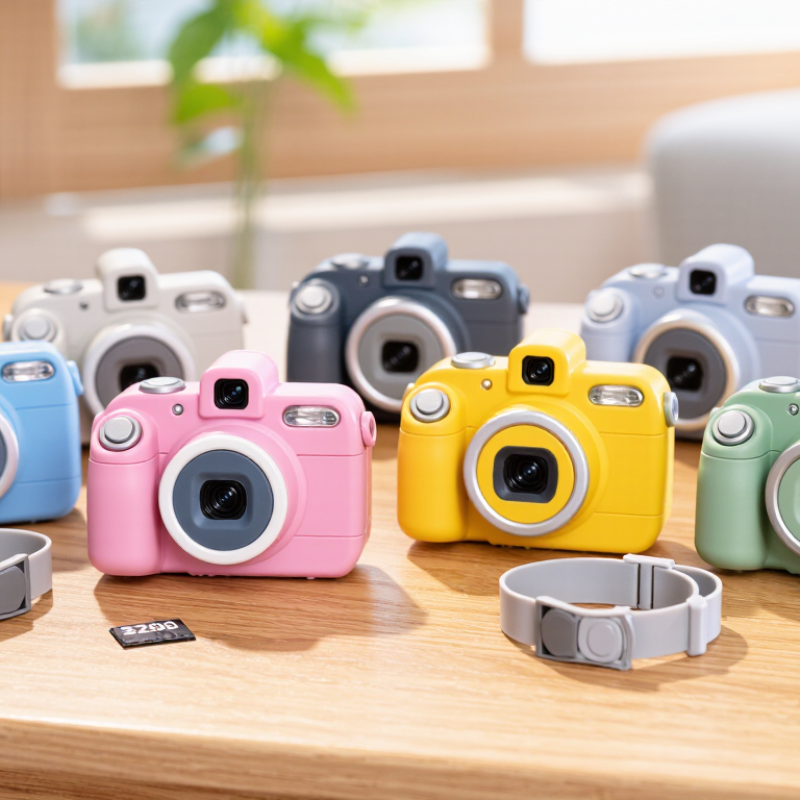
China Top 10 Dual Lens Camera for Kids Suppliers?

What Is a Dual-Lens Camera for Kids?

A dual-lens camera for kids uses two separate lenses, usually placed on opposite sides of the body. One lens faces the scene, while the other supports selfies or video calls. A child can switch views with a simple button, without turning the camera around.

The design is practical, not merely decorative. The front lens may capture a classroom display, a pet, or a birthday cake. The rear lens helps children frame their faces with friends. Many models combine fixed focus, basic digital zoom, and a small screen. Dual lenses do not automatically mean better image quality. Sensor size, shutter response, battery capacity, and optical protection still matter.

Industry data provides useful context. The Camera and Imaging Products Association reported about 8.49 million digital still-camera shipments worldwide in 2023. This figure shows that dedicated cameras remain relevant, even beside smartphones. Grand View Research also identifies growing interest in compact, easy-to-use imaging devices. However, children’s cameras are often judged by durability and simplicity rather than resolution alone.

For suppliers, testing should include drop resistance, lens-cover strength, button size, and charging safety. Privacy deserves attention too. A camera with wireless functions may collect more data than parents expect. That point is easy to overlook. In real use, a bright screen can also reduce battery life quickly. A dual-lens model is useful when controls are clear, images save reliably, and young users can operate it without constant adult correction.

How to Evaluate Chinese Suppliers of Kids’ Dual-Lens Cameras

How to Evaluate Chinese Suppliers of Kids’ Dual-Lens Cameras

Evaluating a Chinese supplier requires more than comparing catalog prices. Request a factory profile, production photos, and recent quality records. A reliable supplier should explain lens alignment, image resolution, storage limits, and switching between front and rear cameras. Ask for a working sample, not only a polished video. Test buttons, charging ports, menus, and shutter response with small hands in mind. Simple details matter.

Child safety needs careful attention. Check battery protection, rounded edges, secure covers, and drop-test procedures. Request applicable safety reports and verify that documents match the exact model. Review data handling as well. Cameras with wireless features need clear privacy controls and secure software updates. Do not accept vague statements such as “international standard.” Ask which standard, which laboratory, and when testing occurred.

Production consistency often separates a dependable supplier from a temporary trader. Compare three samples from different batches. Inspect color accuracy, microphone quality, overheating, and battery performance. Discuss quality checkpoints, acceptable defect rates, replacement parts, and warranty handling in writing. A lower price may hide weaker sensors or unstable firmware. I have seen attractive samples fail after repeated charging. That changed my evaluation method. Supplier communication also reveals much. Do they answer technical questions directly? Do they admit limitations? No supplier is perfect, and my own sample testing can miss problems. Independent inspection remains worthwhile before a large order.

Top 10 Dual-Lens Camera Suppliers in China

Top 10 Dual-Lens Camera Suppliers in China

China’s leading dual-lens camera suppliers serve children’s photography, learning, and outdoor entertainment markets. Their products commonly combine front and rear cameras, simple controls, and protective plastic housings. During supplier checks, buyers should examine lens alignment, image clarity, battery stability, and menu usability. A bright screen means little if the shutter response feels slow.

Reliable suppliers usually provide factory profiles, production photos, sample-testing records, and clear quality-control procedures. Ask for details about sensor resolution, storage support, charging protection, and drop-test methods. A strong supplier should also explain how workers inspect camera modules before assembly. I prefer suppliers that send several samples, not one carefully selected unit.

Small details matter. Check the hinge, buttons, cable fit, and microphone opening. Ask whether replacement parts remain available after the first shipment. In my experience, some suppliers describe a camera as dual-lens, but both lenses may not offer equal performance. That difference can disappoint buyers. I once focused too much on appearance and overlooked software translation quality. The mistake was minor, but children noticed it immediately. Suppliers with responsive engineers usually correct such issues faster, although communication may still require repeated testing and written confirmation.

China Top 10 Dual Lens Camera for Kids Suppliers? - Top 10 Dual-Lens Camera Suppliers in China

This chart presents a practical sourcing evaluation model for comparing China-based dual-lens kids camera suppliers. Safety compliance receives the highest weighting, followed by image quality, product durability, customization capability, minimum order quantity and lead time, and after-sales support. The percentages are evaluation criteria rather than company or brand performance data.

Key Features, Certifications, and Customization Options

China Top 10 Dual Lens Camera for Kids Suppliers?

When comparing China’s top dual-lens camera suppliers, buyers should inspect evidence, not attractive product photos. A 2024 Grand View Research report estimated the global digital camera market at over USD 8 billion. This demand encourages faster launches, but quality can vary widely. Useful features include front and rear lenses, a 2-inch IPS screen, physical shutter buttons, 32GB storage support, and a protective silicone shell. Suppliers should provide CE, RoHS, FCC, and EN 71 documents when applicable. For American sales, CPSIA-related testing may also be required. Certificates must match the exact model, battery, and destination market.

Customization is often the real difference between suppliers. Confirm logo printing, shell colors, gift-box artwork, firmware language, image resolution, charging ports, and parental settings. A factory offering only digital mockups may not control production fully. Request a working sample, battery test, drop-test record, and an independent inspection report.

TÜV Rheinland’s consumer product testing guidance repeatedly emphasizes traceability and risk-based testing, which is especially important for children’s electronics. One overlooked detail is file management; oversized photos can quickly fill low-capacity memory.

Tips: Ask for recent factory audit records. Check whether the certificate number matches the camera model. Test both lenses in indoor lighting. Review the battery label carefully. A low price can hide weak hinges, slow software, or incomplete documentation. My practical concern is simple: supplier rankings look useful, but an unverified “top ten” list should never replace sample testing and compliance review.

How to Select the Right Supplier for Your Business

China Top 10 Dual Lens Camera for Kids Suppliers? How to Select the Right Supplier for Your Business

Supplier selection should begin with evidence, not attractive product photos. Grand View Research estimates that the global digital camera market reached about USD 8.1 billion in 2023. Its projected growth also increases competition among private-label manufacturers. Request factory audit records, production capacity, and recent quality data before discussing prices.

Ask for working samples with front and rear cameras. Check image clarity, shutter response, battery life, storage stability, and drop resistance. Samples tell more. A reliable supplier should provide test reports from accredited laboratories. Confirm applicable requirements, including EN 71, ASTM F963, and IEC 62368-1, based on your target markets. Also review privacy controls, charging safety, packaging warnings, and user instructions. A certificate without traceable reports is weak evidence.

Commercial performance matters too. Circana reported that U.S. toy sales declined by approximately 8% in 2023. This makes excess inventory and unclear quality claims especially risky. Compare minimum order quantities, replacement rates, spare-part access, and production lead times. Ask how the supplier handles defective batches. Their answer may reveal more than a sales presentation. Do not assume the lowest quotation is efficient; a cheaper lens, battery, or plastic component can create returns later. I would also test ten to twenty units from one production batch, although this still cannot reveal every factory problem. Verify the final inspection process before approving mass production.

FAQS

What documents should buyers request from a Chinese supplier of children’s dual-lens cameras?

Request a factory profile, production photos, recent quality records, and model-specific safety reports. Avoid vague claims like “international standard.” Ask for the testing laboratory and date.

How should buyers test a camera sample before placing a large order?

Use a working sample, not only a polished demonstration video. Test buttons, charging, menus, shutter response, lens switching, and cable fit. Small hands reveal practical problems.

Why should buyers compare samples from different production batches?

Three samples can reveal inconsistent color, microphone quality, battery life, or software behavior. One attractive sample may hide production weaknesses. I once trusted appearance too much.

Which physical safety details deserve close inspection?

Check rounded edges, secure covers, protected batteries, sturdy hinges, and drop-test procedures. Inspect the microphone opening and charging port carefully. Tiny gaps matter.

How can buyers evaluate image and lens performance?

Check lens alignment, image clarity, resolution, and front-to-rear switching. Do not assume both lenses perform equally. Bright screens can distract from slow shutter response.

What quality-control questions should buyers ask suppliers?

Ask how workers inspect camera modules before assembly. Discuss defect limits, replacement parts, warranty handling, and written checkpoints. Clear answers are valuable.

How should buyers review wireless features and privacy controls?

Request clear data-handling information, privacy settings, and secure software-update procedures. Confirm which features collect or transmit data. Do not rely on general promises.

What signs suggest that a supplier may be dependable?

Responsive engineers usually answer technical questions directly and admit limitations. They should provide several samples and explain testing procedures. Communication still needs written confirmation.

Can a lower catalog price indicate hidden quality problems?

It can reflect weaker sensors, unstable firmware, or limited battery protection. Compare long-term performance, not just appearance. My own testing can miss defects, so independent inspection remains worthwhile.

Conclusion

This guide introduces what a Dual Lens Camera for Kids is and explains how its front-and-rear lens design can support simple photography, selfies, video recording, and creative learning. It also outlines practical criteria for evaluating Chinese suppliers, including product quality, manufacturing experience, safety management, communication, production capacity, sampling procedures, pricing transparency, and after-sales support. A structured overview of the top 10 supplier types in China helps buyers compare potential partners without focusing on brand names.

The article also reviews important features such as child-friendly controls, durable materials, display quality, battery performance, storage options, image effects, and protective accessories. It highlights the value of relevant certifications, inspection procedures, packaging services, logo printing, software customization, and flexible order quantities. Finally, readers are guided to select the right supplier by matching product specifications, target market, budget, compliance requirements, delivery expectations, and long-term cooperation goals.

Vivienne

Vivienne

Vivienne is a dedicated marketing professional with a strong understanding of the company’s products, market trends, and customer needs. With a background in strategic communication and product-focused content development, she regularly contributes insightful articles to the company’s professional......