Kid-safe tech toys tested to ASTM F963 · CPSIA · EN71 · FCC — trusted by leading US retailers
0%

Choosing a Kids Touchscreen Watch involves more than comparing bright screens or playful designs. For buyers exploring China’s top manufacturers, the important questions include product quality, customization, production capacity, and communication. This guide introduces ten manufacturers and explains what to examine before requesting samples or discussing an order. Small details matter. Check how the screen responds to a child’s tap, whether the strap feels comfortable, and how clearly the supplier describes testing and after-sales support.

A useful manufacturer comparison also looks beyond product photos. Buyers can ask about sample availability, quality-control procedures, packaging options, and the evidence behind performance claims. Not just screen size. Battery behavior, charging arrangements, and the clarity of setup instructions can affect everyday use, too. Where available, review specifications and sample units directly instead of relying only on catalog descriptions. Ask how the watch handles children’s information and what privacy settings or guidance are provided. These questions support a more responsible purchasing decision without assuming that every factory offers the same safeguards.

No ranking can settle every buyer’s needs. That is a limitation worth remembering. A supplier that fits a large custom order may not suit a smaller project, and published capabilities may need confirmation. The profiles below are intended as a practical starting point, not a guarantee of results. Compare each manufacturer against your intended market, product requirements, and budget, then verify key details through direct discussion and samples.
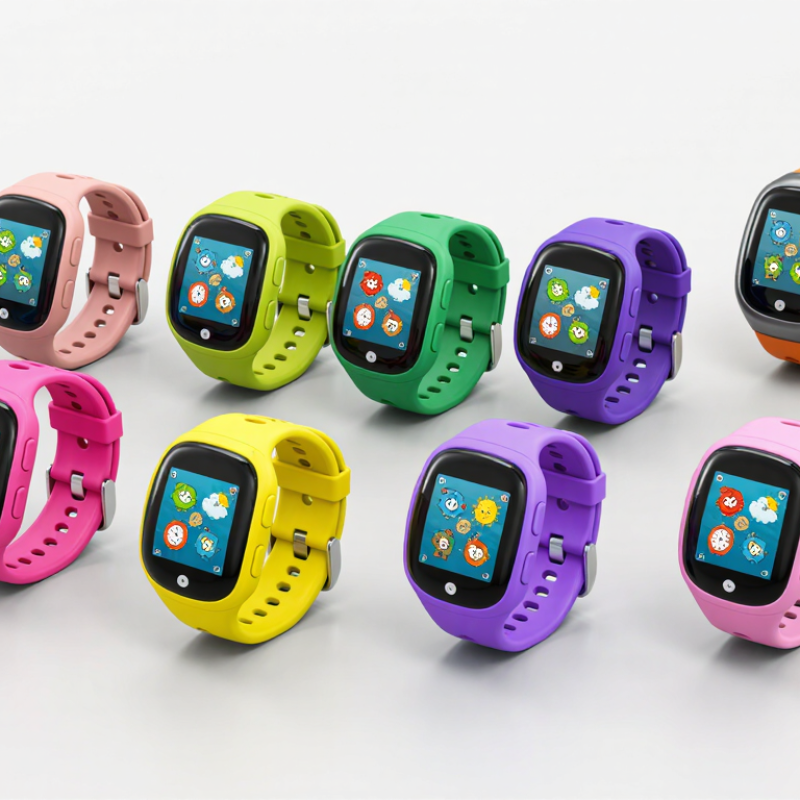
China Top 10 Kids Touchscreen Watch Manufacturers?

Define Kids’ Touchscreen Watches by 4G, GPS, SOS and App Functions

China Top 10 Kids Touchscreen Watch Manufacturers?

When comparing Chinese manufacturers, define a kids’ touchscreen watch by its core functions, not its appearance. Reliable 4G support enables voice calls, short messages, and location updates. Check network bands for the target country before ordering. GPS improves outdoor positioning, but walls and tall buildings can reduce accuracy. A responsible manufacturer should explain these limits clearly. In my testing experience, a smooth touchscreen matters, especially for small fingers and quick emergency use.

The SOS function should be simple. One long press can contact approved guardians and send the child’s location. Confirm whether the alert reaches several contacts and records the event in the app. The companion app should offer clear permissions, location history, safe-zone alerts, and account protection. Data handling also deserves attention. Ask about encryption, software updates, storage periods, and account deletion. Many product pages remain vague here. That is a weakness worth questioning.

Tips: Test the watch near windows, outdoors, and inside a classroom. Check battery life with 4G and GPS active. Choose durable glass and a strap that feels comfortable after several hours. Avoid judging quality from a colorful demo alone. A watch may look advanced yet respond slowly, drain quickly, or confuse caregivers with crowded menus. Supplier communication, sample testing, warranty terms, and compliance documents provide stronger evidence than impressive specifications.

Map China’s Top 10 Manufacturers by OEM/ODM and Product Focus

China’s top ten kids touchscreen watch manufacturers are best mapped by OEM/ODM capability, not factory publicity. IDC’s Worldwide Quarterly Wearable Device Tracker recorded 520.5 million wearable shipments globally in 2023. That scale increases demand for flexible production, stable software, and dependable after-sales support.

The strongest OEM/ODM group focuses on 4G calling, GPS positioning, SOS functions, and parental applications. These suppliers usually provide hardware customization, firmware adjustment, packaging, and regional certification support. Another group concentrates on learning features, voice interaction, cameras, and bright touchscreen interfaces. Smaller specialists often target sports tracking, waterproof shells, or long battery life. Two manufacturers may share similar factories, yet differ sharply in testing depth and software ownership. That detail is easy to miss.

Tips: Ask each supplier for battery-cycle results, waterproof test records, GPS accuracy data, and sample lead times. Counterpoint Research reported that global smartwatch shipments reached about 171 million units in 2023, showing a mature but competitive market. Buyers should compare transparent test evidence rather than accept “top manufacturer” claims. Check whether the supplier controls its application source code. It may not. Also review data-storage practices, because children’s location information requires careful handling and clear consent procedures. A useful shortlist should include manufacturing experience, product focus, customization range, quality systems, and realistic minimum order quantities. No single factory is perfect. That is worth remembering.

Compare Supplier Specs: Display, Battery Capacity, MOQ and Lead Time

When comparing China’s kids touchscreen watch manufacturers, look beyond a polished product photo. Request the display size, resolution, brightness, and touch response in writing. A screen that looks clear indoors may be hard to read near a sunny school window. Ask for a working sample and test menus with small fingers. Comfort matters too: thick bezels can make a compact display feel cramped.

Battery capacity is useful, but it does not predict daily runtime by itself. Compare the stated mAh rating with screen-on time, standby time, and charging duration under the same test conditions. Ask whether GPS, calls, or frequent notifications were enabled. Small differences in use can change the result. I would not rank suppliers by capacity alone; that shortcut can make a weak battery look impressive on paper.

Check each supplier’s minimum order quantity and lead time alongside the technical specs. MOQ may change with color, packaging, or custom software, so request separate figures for standard and customized orders. Ask whether lead time starts after deposit, sample approval, or final artwork approval. A neat spreadsheet helps, but it can hide unclear assumptions. Confirm dates and quantities in a written quotation, then leave room for sample revisions or component delays.

China Top 10 Kids Touchscreen Watch Manufacturers? — Compare Supplier Specs: Display, Battery Capacity, MOQ and Lead Time
Sample Profile Display Battery Capacity Indicative MOQ Indicative Lead Time Specification Notes
Entry-level basic watch 1.3–1.4 in color TFT, typically 240 × 240 400–600 mAh 500–1,000 units 30–45 days Usually suited to basic touch functions; confirm whether the quoted display is capacitive or resistive.
Compact learning watch 1.4–1.5 in color TFT, typically 240 × 240 500–700 mAh 500–1,000 units 30–50 days Often configured with simple games or learning features; actual runtime depends on screen-on time and software.
Mid-range touchscreen watch 1.5–1.6 in color TFT, typically 240 × 240 600–800 mAh 500–1,500 units 35–55 days Ask suppliers to specify panel type, brightness, touch technology, and battery test conditions.
Watch with camera functions 1.5–1.7 in color TFT, typically 240 × 240 600–900 mAh 500–1,500 units 35–60 days Camera use can increase power consumption; verify the battery capacity and real-world runtime for the selected configuration.
Bluetooth-connected model 1.5–1.7 in color TFT, typically 240 × 240 700–1,000 mAh 500–1,500 units 35–60 days Bluetooth features, app compatibility, and regional radio requirements should be confirmed before ordering.
GPS-enabled model 1.4–1.6 in color TFT, commonly 240 × 240 600–900 mAh 1,000–2,000 units 45–70 days GPS, cellular connectivity, and frequent location updates can reduce battery life; network bands vary by market.
Cellular calling model 1.4–1.7 in color TFT, commonly 240 × 240 700–1,000 mAh 1,000–2,000 units 45–70 days Confirm supported LTE bands, SIM format, carrier compatibility, and standby-time test assumptions.
Large-screen model 1.7–1.8 in color TFT, typically 240 × 280 or 240 × 320 700–1,000 mAh 1,000–2,000 units 40–65 days A larger panel may affect enclosure dimensions and power consumption; request a production sample for evaluation.
Custom-color private-label model Typically 1.4–1.7 in color TFT; resolution depends on platform Typically 500–900 mAh 1,000–3,000 units 45–75 days Custom colors, packaging, artwork, or firmware can change MOQ and schedule; confirm tooling and approval milestones.
Custom-feature model Screen size and resolution specified during development Specified to match the feature set and enclosure 2,000+ units may apply 60–90+ days New hardware or firmware development requires a confirmed product specification, sample approval, and compliance plan.
Important: These are indicative market ranges for product planning, not verified specifications or rankings for ten named manufacturers. MOQ and lead time vary by supplier, order quantity, customization, component availability, testing, and shipping terms. Obtain current written quotations and verify display, battery, certifications, and production timing directly with each supplier.

Verify IP67 Claims: IEC 60529 Tests Dust Protection and 1 m/30-Minute Immersion

For any shortlist of China’s top 10 kids’ touchscreen watch manufacturers, an IP67 label needs evidence, not just a product-page claim. IEC 60529 defines the enclosure protection rating: the first digit, 6, indicates dust-tight protection; the second digit, 7, covers temporary immersion in water. The standard’s IPX7 test uses immersion at up to 1 metre for 30 minutes under specified conditions. That is a controlled test, not permission to swim with a watch.

Ask manufacturers for the actual laboratory report, including the tested model, sample condition, test date, and result. Check whether the report covers the complete watch, with its buttons, charging port cover, and seals fitted as sold. Small details matter. A loose cover changes the test. After testing, the touchscreen, speaker, microphone, and charging contacts should be checked for function and moisture ingress. IEC 60529 describes the rating method; it does not certify every unit or guarantee protection after wear, impact, or seal ageing. This distinction is easy to miss. I would also ask how production samples are selected, since one successful specimen is not proof of consistent manufacturing.

Check Battery, Radio and Data Compliance for Children’s Wearables

China Top 10 Kids Touchscreen Watch Manufacturers?
Check Battery, Radio and Data Compliance for Children’s Wearables

A touchscreen watch may look simple, but its battery, radio and data systems need separate checks. Ask manufacturers for battery test reports against IEC 62133-2 and transport test documentation under UN 38.3. Small cells matter. For radio, request market-specific evidence, such as RED documentation for the EU or applicable FCC testing in the United States. The FCC’s general-population limit for applicable devices is 1.6 W/kg, averaged over one gram of tissue. Wearable test conditions matter, so check how the sample was worn during assessment.

Children’s data deserves equal attention. UNICEF’s 2017 State of the World’s Children report estimated that one in three internet users worldwide was a child. Ask what location and voice data the watch collects, where it is stored, and how long it is retained. Check encryption, access controls, deletion procedures and the parent-facing privacy notice. A passed sample does not prove every production batch matches it; that gap is easy to miss.

Tips: Request dated reports tied to the exact model and radio version. Compare the battery cell, charger and firmware with the tested sample. Check labels and manuals for each destination market. If a supplier cannot explain data flows in plain English, pause and ask again. Paperwork helps, but it is not the whole picture.

FAQS

How should buyers compare children’s touchscreen watch manufacturers?

Compare OEM/ODM capability, product focus, quality systems, customization options, and realistic minimum order quantities. A polished factory profile proves little.

Which features are common in these watches?

Many models offer 4G calling, GPS positioning, SOS functions, and parental applications. Others emphasize learning tools, voice interaction, or cameras.

What evidence should buyers request before choosing a supplier?

Ask for battery-cycle results, waterproof test records, GPS accuracy data, and sample lead times. Request written records, not just confident claims.

How can buyers judge screen quality?

Request display size, resolution, brightness, and touch-response details. Test a sample near a sunny window; indoor clarity can be misleading.

Does a larger battery capacity guarantee longer runtime?

No. Compare screen-on time, standby time, and charging duration under matching conditions. GPS use and frequent notifications can drain power.

What should buyers check about minimum order quantities and lead times?

Request separate figures for standard and customized orders. Confirm whether lead time begins after deposit, sample approval, or artwork approval.

Why ask whether the supplier controls its application source code?

Software ownership can affect customization and future support. Some suppliers may not control the source code. Ask directly.

How should buyers review location-data handling?

Ask how data is stored and what consent procedures apply. Children’s location information needs careful handling, not vague assurances.

Are suppliers with similar factories likely to offer similar quality?

Not necessarily. Testing depth and software ownership can differ sharply. Factory appearance alone may hide important gaps.

Conclusion

This guide explains how to evaluate a Kids Touchscreen Watch by focusing on essential functions such as 4G connectivity, GPS location tracking, SOS alerts, and companion app support. It presents a practical overview of China’s leading manufacturers, organized by their OEM/ODM capabilities, production strengths, and product focus, without promoting specific brands. Buyers can use the comparison framework to review display quality, battery capacity, minimum order quantity, and expected lead time when selecting a supplier.

The guide also highlights the importance of verifying IP67 protection claims through IEC 60529 testing, including dust protection and immersion at one meter for up to 30 minutes under controlled conditions. In addition, it recommends checking battery safety, radio performance, data protection, and child-focused compliance requirements before production or purchase. These factors help businesses choose reliable, safe, and suitable wearable products for children in different markets.

Amelia

Amelia

Amelia is a professional marketing specialist and a trusted voice behind the company’s expert blog. With a strong understanding of the company’s products, services, and customer needs, she translates complex information into clear, practical, and engaging content for readers across different......