Choosing Two Way Radio Toys for a child involves more than picking a bright color or a fun-sounding feature. Age guidance, comfortable buttons, battery requirements, and clear audio all matter during real play. A radio that works well in a quiet bedroom may behave differently in a park with trees, walls, and other signals nearby. Check the details.
This 2026 guide introduces ten options for different ages, budgets, and play styles. It considers practical points such as handset size, ease of use, charging or battery changes, and the features families may actually need. A long advertised range can sound impressive, but buildings and terrain often affect performance. Treat range figures as estimates, not promises. Small print matters.
Some sets may suit backyard adventures, while others are better for simple games at home or on family outings. No single choice will fit every child, and a toy with more buttons is not automatically the better one. Product availability and specifications can also change, so confirm current details before buying. The comparisons ahead are intended to help caregivers ask useful questions, rather than suggest that every model has been independently tested. A little skepticism helps. Check age recommendations and inspect each set for sturdy construction and comfortable handling, especially for younger children.
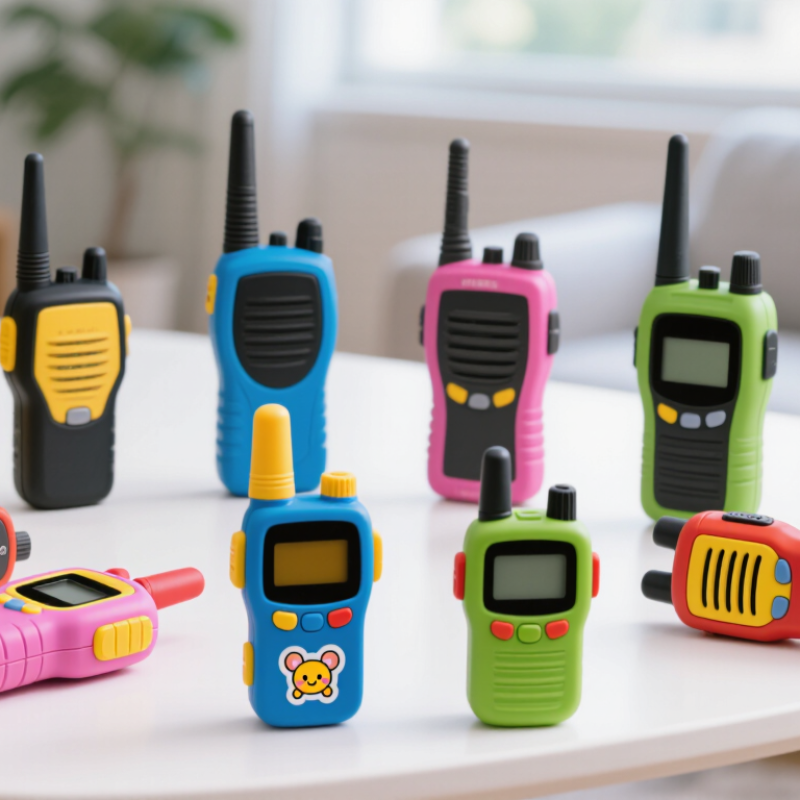
Two-way radio toys let children send short voice messages between handheld devices without using a phone. Most have a speaker, microphone, antenna, channel controls, and a push-to-talk button. Pressing the button sends the child’s voice over a radio signal; releasing it lets the device receive a reply. This is usually half-duplex communication, so only one person can speak at a time. The little pause is part of the fun.
Many toy sets are designed to communicate with each other on matching channels. A child might call from the backyard while a sibling answers near the porch. Walls, hills, trees, and nearby radio activity can weaken the signal, so advertised range is best treated as an estimate, not a promise. Keep the devices close during a first test. Check the manual for channel setup, battery type, charging instructions, and age guidance. Controls vary between toys.
These radios work best for brief, simple messages: “I’m by the garden gate,” not a long story. Clear speech helps. So does holding the microphone a few centimeters from the mouth, rather than shouting into it. Adults should explain that nearby compatible radios may sometimes hear transmissions, depending on the device. Avoid sharing personal details. One small drawback: children can press buttons accidentally, and some toys have scratchy audio. That can be annoying, but it also gives them a reason to take turns and listen carefully.
A good two-way radio for a child should feel simple in small hands. Look for large push-to-talk buttons, clear labels, and a speaker loud enough for a backyard game. Controls that require several menus can frustrate younger users. Try the buttons before buying, if possible.
Range claims need context. Walls, trees, and nearby buildings can weaken a signal, so a radio suited to a home or park may not work across a neighborhood. More channels can help families avoid nearby chatter, but toy radios generally do not offer private conversations. Keep messages casual. A short test in the places your child will play gives a more useful picture than a box estimate.
Battery type matters during longer outings. Rechargeable models reduce disposable battery changes, while replaceable batteries can be easier to swap away from home. Check charging time and whether the cable is included. A rounded, lightweight body, a secure battery cover, and a wrist strap can make everyday use easier. Still, no toy is indestructible; drops onto pavement may damage it. Choose sturdy construction, but expect to inspect the radio now and then.
A child’s age should guide the first cut. For younger children, check the package’s age rating, battery compartment, and any detachable antenna or clip. Small pieces can become choking hazards, and tiny controls frustrate children still developing fine-motor skills. The U.S. Consumer Product Safety Commission estimated 231,700 emergency-department-treated toy injuries among children 14 and younger in 2023; this figure covers toys broadly, not two-way radios alone. Choose a sturdy, simple set, and supervise younger users.
Range needs a reality check. A stated maximum is usually measured in open conditions, not between bedrooms, trees, or apartment walls. Ask whether the maker explains its testing conditions, then test the radios in the places your child will actually use them. Walls matter. A clear yard can work well; a basement may not. The FCC’s Family Radio Service guidance describes operating limits for FRS devices, but those limits do not guarantee a particular toy’s usable distance.
Safety includes everyday handling, not only radio performance. Look for secure battery doors, rounded edges, readable controls, and a volume level that does not startle a child at close range. A “long-range” label is not a safety feature. Let the child practice calling from nearby, then move farther away while an adult stays within sight. I’d also check whether replacement batteries are easy to secure; it’s a small detail, but one buyers can overlook. Sources: CPSC, 2023 Annual Toy-Related Deaths and Injuries Report; FCC, Family Radio Service guidance.
Practical radio range depends heavily on surroundings. These approximate planning examples are not product ratings or guaranteed distances.
How to use this: Walls, buildings, and terrain can reduce range substantially, so choose a radio for where children will actually use it—not just its advertised maximum. Check the manufacturer’s age guidance, supervise young children, and look for secure battery compartments and appropriately sized parts.
Top 10 Two-Way Radio Toys for Kids to Buy in 2026
A useful 2026 shortlist should reward clear controls, comfortable grips, and dependable communication—not flashy packaging. The U.S. Consumer Product Safety Commission’s Toy-Related Deaths and Injuries report for 2023 estimated 231,700 toy-related emergency-room injuries among children aged 14 or younger. That figure covers many toy types, not radios, but it supports checking age guidance, battery access, and sturdy construction. For backyard missions, consider a simple two-radio set with large buttons. For siblings, try a four-unit family pack. Other strong picks include rechargeable models, lightweight clip-on radios, easy-to-clean sets, radios with adjustable volume, models with several channels, indoor-friendly sets, and versions with a clear battery indicator.
Range claims need context. Walls, trees, and nearby buildings can weaken a signal, so a claimed maximum distance may disappoint in real play. Check whether the instructions explain channel selection and supervision, and whether the radio fits a child’s hand. A parent testing the controls before play can prevent frustrating button hunts. Keep it simple. For younger children, avoid tiny detachable parts and look for secure battery compartments. For older kids, extra channels may make cooperative games more engaging, though more settings can also mean more confusion.
This top-10 approach weighs practical play value over accessories: clear audio, comfortable use, sensible durability, and straightforward setup. Read current product instructions and safety notices before buying, since designs can change between model years. A radio that works across one room may not work across a park. That limitation deserves a place in any honest buying guide.
For a useful comparison, look beyond the runtime printed on the box. A radio used mostly for listening may last longer than one used for frequent calls. Check whether it takes replaceable batteries or has a rechargeable pack, and note the charging time. Small details matter. A low-battery alert is helpful when play stretches past an afternoon.
Durability is more than a thick plastic shell. Check for rounded edges, a secure battery door, and buttons that are easy for small fingers to press. A simple test at home can reveal loose covers or awkward controls before a toy goes outdoors. Still, no ordinary toy should be treated as unbreakable. One caveat: water-resistance claims can be easy to misread, so check the stated limits rather than assuming a radio can handle a puddle.
Value comes from balancing purchase price with likely upkeep. Rechargeable models may reduce battery replacement, but only if the charging routine suits your household. Replaceable batteries can be convenient on trips, though costs may add up. Compare what is included, such as a charging cable or belt clip, and check whether both radios use the same power setup. A cheaper pair is not necessarily better value if its battery door feels flimsy or its controls frustrate children. I would also leave room for judgment: kids vary, and a feature that seems essential on paper may rarely get used.
Press and hold the push-to-talk button to transmit. Release it to hear a reply. Only one person speaks at a time.
Most use half-duplex communication, so one device transmits while the other receives. Taking turns is part of the game.
The stated range is an estimate, not a promise. Walls, trees, hills, and nearby radio activity can weaken the signal. Test them nearby.
Keep messages short and hold the microphone a few centimeters from the mouth. Shouting usually does not help much. Scratchy audio happens.
Nearby compatible radios may sometimes receive it, depending on the device. Teach children not to share personal details.
Read the manual for channel setup, battery type, charging instructions, and age guidance. Controls can vary between toys.
Check the power type, charging time, and low-battery alert. Frequent talking may drain a radio faster than mostly listening. Small detail, big difference.
Look for rounded edges, a secure battery door, and buttons small fingers can press. Check water-resistance limits; a puddle may still cause trouble. I might overvalue a sturdy shell, but flimsy controls can frustrate children.
Two Way Radio Toys let children communicate with each other using handheld devices that send and receive short-range radio signals. They can make outdoor games, family outings, and imaginative play more engaging while helping kids practice turn-taking and clear communication. When choosing a pair, consider simple controls, comfortable sizing, clear sound, useful features, and a design suited to the child’s age.
This 2026 guide compares ten types of popular options and explains how age, intended use, and advertised range can shape your choice. It also highlights practical safety considerations, such as choosing age-appropriate toys and following the manufacturer’s instructions. To find the best value, compare battery life, charging or battery-replacement needs, durability, and ease of use alongside the price. The right choice is one children can operate comfortably and that fits the way they plan to play.