Enterprise OEM/ODM Manufacturing Whitepaper & Technical Procurement Guide for Global Retailers, Importers & Brand Partners
Featured Radio & Smart Wearable Catalog
Explore our top-performing CE & FCC certified radio devices, smartwatches, and wireless interaction systems engineered for compliance, durability, and commercial scalability.
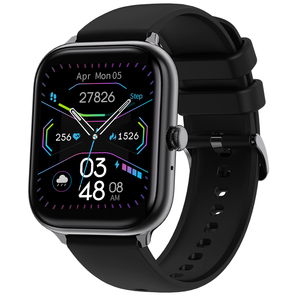
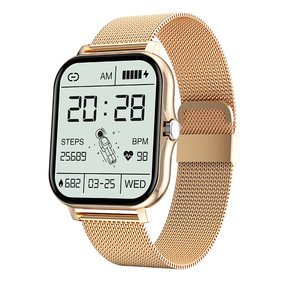
1.75" Alloy case Full Touch Screen Phone Call Health Monitoring Features Fitness Tracker Waterproof Talking Ladies Smart Watch
Executive Summary & Global Radio Electronics Market Outlook (2026–2030)
The global consumer wireless equipment, radio transceiver toy, and smart wearable industry is experiencing a monumental paradigm shift. Driven by stricter international safety mandates, radio spectrum regulations (specifically the European Union's Radio Equipment Directive 2014/53/EU and the US Federal Communications Commission Title 47 Part 15), and evolving consumer preferences toward privacy-first offline technology, procurement executives face mounting regulatory complexity.
As a leading CE Certified Radio Toy Factory & Exporter, our engineering division has designed this whitepaper to provide commercial buyers, brand developers, and supply chain managers with actionable insights. Modern wireless products—ranging from multi-channel Sub-GHz long-range walkie talkies and interactive LCD drawing pads to Bluetooth 5.4 AI-assisted health watches—must balance radio frequency (RF) efficiency, battery ergonomics, non-toxic material safety, and total cost of ownership (TCO).
Key Market Vectors & RF Compliance Requirements
In mature consumer electronics markets across North America, the European Union, and the United Kingdom, non-compliant radio devices encounter severe regulatory penalties, customs seizures, and marketplace blacklisting. Importers must rigorously verify three compliance pillars prior to initiating high-volume purchase orders:
Electromagnetic Compatibility (EMC) & RF Spectrum Efficiency: Radio toys operating on 27MHz, 40MHz, 433MHz, 868MHz, or 2.4GHz ISM bands require harmonic emission suppression to prevent channel interference with emergency and telecom infrastructure.
Specific Absorption Rate (SAR) & Human Exposure Limits: For wrist-worn radios and head-adjacent wearables, SAR testing ensures radio frequency energy absorption remains well within safe physiological parameters (<2.0 W/kg averaged over 10g of tissue under EN 62209-2).
Offline Privacy & Data Security: Modern parents and institutional buyers increasingly favor non-connected, zero-cloud wearables for young users. Operating without mandatory SIM cards or cellular telemetry eliminates recurring subscription overhead and data vulnerability risks.
Technology Roadmap
Future Sourcing Trends in Radio Electronics & Smart Devices
Analyzing procurement data across major retail partners—including Walmart, Target, Amazon, Macy’s, and specialty toy networks—reveals four dominant technological trends shaping product development through 2028:
1. Dual-Band RF & Dynamic Frequency Hopping
To combat frequency congestion in urban environments, next-generation radio toys incorporate Spread Spectrum Frequency Hopping (FHSS). By dynamically switching sub-channels across 2.4GHz or 433MHz bands, signal clarity is maintained over ranges up to 3 kilometers without audio static or voice crosstalk.
2. On-Device Edge AI Processing
Advanced smartwatches now feature embedded NPU (Neural Processing Unit) microcontrollers capable of running real-time speech translation algorithms, voice modulation, and health telemetry locally without requiring a persistent Wi-Fi or LTE internet connection.
Lithium polymer cell chemistries are now integrated with dual IC protection boards against overcharge, short circuits, and thermal runaway. All battery packs undergo UN38.3 vibration and altitude pressure simulation for air/ocean freight compliance.
4. Eco-Conscious & Bio-Based Polymers
Commercial buyers are demanding phthalate-free food-grade silicone straps and recycled ABS enclosures. Ultrasonic welding processes replace toxic adhesives, improving shock resistance and water ingress protection (IP67/IP68).
By implementing these technological innovations into standard product lines, overseas buyers can achieve significant shelf differentiation, command higher retail margins, and minimize warranty return rates.
Manufacturing Excellence
Enterprise Factory Capabilities & Rigorous Quality Control
As an OEM/ODM manufacturing partner dedicated to global excellence, our production ecosystem operates under ISO 9001:2015 quality management systems and BSCI ethical workplace standards. From raw component sourcing to automated SMT (Surface Mount Technology) assembly, every stage is audited for total quality assurance.
Complete Testing & Certification Matrix
We provide buyers with comprehensive laboratory documentation packs ready for customs inspection and retail compliance filing. Our technical verification matrix includes:
ASTM F963 & CPSIA (United States): Total lead content verification, heavy metal extraction analysis, mechanical sharp-edge testing, and tracking-label serialization.
EN71 & EN62115 (European Union): Mechanical/physical safety, flammability rating, chemical migration testing, and safety of electric toys.
CE RED & FCC Part 15: Full radio parameter testing (spurious emissions, power output, band edge compliance) conducted in accredited 3-meter semi-anechoic chambers.
RoHS 2.0 & REACH SVHC: Verification that all PCBs, solder pastes, cables, and plastic housings are free of hazardous substances.
In-Line Reliability & Production Control
Before batch dispatch, sample units undergo intensive mechanical and environmental stress tests:
Tumble & Drop Test1.5-meter concrete drop simulation across 6 impact axes to ensure structural integrity.
Thermal ChamberingOperating verification from -20°C to +60°C with 95% relative humidity testing.
Hydrostatic WaterproofingPositive pressure submersion tank testing validating IP67 & IP68 seal endurance.
Frequently Asked Questions for B2B Procurement
Detailed answers to technical, regulatory, and logistics questions commonly raised by retail buyers and OEM partners.
What specific radio frequency and toy safety standards do your factory products satisfy?
Our complete product range is manufactured and tested in accordance with international mandates. For North America, we strictly adhere to ASTM F963, CPSIA, and FCC Part 15 regulations. For European and UK markets, our products meet EN71 (Parts 1, 2, 3), EN62115 for electrical safety, and the CE Radio Equipment Directive (RED 2014/53/EU). Additionally, lithium battery packs carry UN38.3 transport safety test reports and MSDS paperwork for seamless air and ocean freight clearance.
Do your smartwatches, radio buzzers, and walkie talkies require monthly subscription plans or SIM cards?
No. Our devices operate entirely offline without mandatory SIM cards, monthly software subscriptions, or cloud dependency. This offline architecture provides instant plug-and-play operation for end users, eliminates recurring operational costs for families, and simplifies in-store consumer demonstrations for retail salespeople.
What customizable OEM/ODM options are available for corporate orders?
We provide comprehensive ODM/OEM tailoring across all product lines. Customization scope includes custom tooling/housing colors, silkscreen logo printing, bespoke UI/UX software firmware development, custom Bluetooth pairing identifiers, localized multilingual packaging artwork, window-box vs. eco-mailer retail boxing, and custom firmware pre-loads (such as proprietary alarm sounds or menu languages).
How does your production facility guarantee batch consistency and low defect rates?
We employ an Acceptable Quality Limit (AQL 0.65 Level II) inspection regimen. Manufacturing begins with Automated Optical Inspection (AOI) on raw PCB SMT lines, followed by 100% functional RF testing, screen calibration checks, and battery aging cycles. Golden master samples are sealed prior to production runs, and photographic inspection reports are provided to buyers before dispatch.
What is the standard Minimum Order Quantity (MOQ) and production lead time?
Standard MOQs for factory-stock catalog items start as low as 500 units per SKU with neutral packaging. For full OEM customized packaging, custom colorways, and silk-printed branding, standard MOQs range from 1,000 to 3,000 units depending on component complexity. Typical mass production lead time is 25 to 35 days following engineering sample approval.
How are warranty claims, spare parts, and after-sales service structured for global distributors?
We back all shipped products with a 12-month manufacturer limited warranty. For bulk retail shipments, we provide a 1% spare units/parts buffer allowance within the main container shipment to handle instant customer replacements locally. Furthermore, our online help centers offer downloadable PDF manuals, quick-start setup guides, and troubleshooting videos to resolve user errors before store return events occur.
Partner with a Trusted CE Certified Radio Toy Manufacturer
Accelerate your retail growth with industry-leading wireless toys, smartwatches, and interactive consumer electronics built to international compliance standards. Request factory direct pricing, technical datasheets, and OEM sample kits today.
.png)