.png)
Engineered to meet rigorous global standards including ASTM F963, CPSIA, EN71, and FCC. Explore our direct-from-factory STEM product lines designed for maximum engagement, screen-free learning, and proven retail yield.
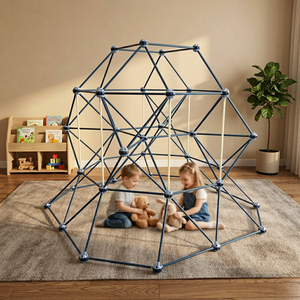
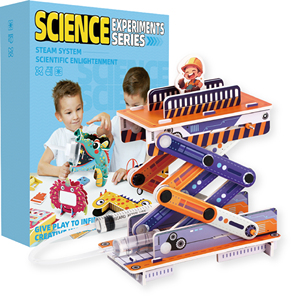
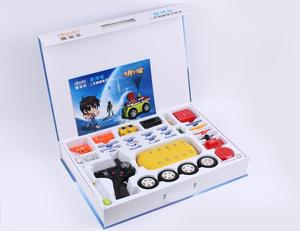
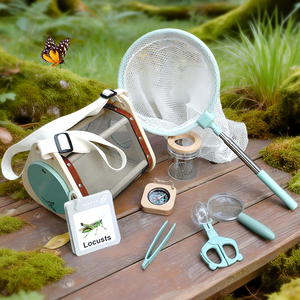
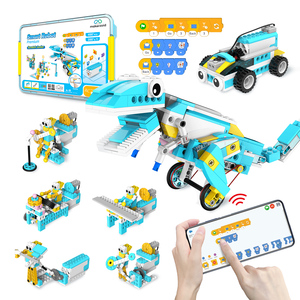
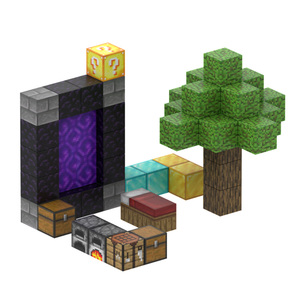
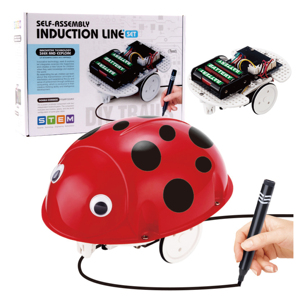
The global demand for Science, Technology, Engineering, and Mathematics (STEM) educational toys has undergone a fundamental structural shift. Driven by early-childhood cognitive development initiatives and institutional integration of hands-on learning models, procurement executives now evaluate overseas supply chains through a multi-dimensional matrix: manufacturing precision, regulatory speed-to-market, material traceability, and safety architecture. Finding the best STEM toys factories in China requires a deep understanding of China's industrial clustering strategy.
China produces over three-quarters of the world's educational and electronic play hardware. However, the manufacturing landscape is highly specialized across regional industrial clusters. Buyers navigating China's factory landscape must align product specifications with local cluster competencies:
| Manufacturing Hub | Primary Product Specialization | Supply Chain Advantage | Dominant Material Capabilities |
|---|---|---|---|
| Shantou (Chenghai District) | Robotics, Coding Kits, Injection Molding Blocks | High-speed automated tooling, ultra-short component lead times | Virgin ABS, Polycarbonate, Recycled PET |
| Shenzhen & Dongguan | Kid-Safe Smart Devices, Micro-Controllers, Active Tech | Advanced SMT lines, IoT integration, UN38.3 battery certification | Medical-grade Silicone, Reinforced PC-ABS alloys |
| Ningbo & Yunhe | Montessori Wooden Kits, Physical Mechanics Sets | FSC-certified timber sourcing, non-toxic water-based coatings | Sustainably harvested Beechwood, Birch, Non-toxic Lacquers |
| Zhejiang (Yiwu & Yongkang) | High-Volume DIY Craft Kits, Elementary Physics Sets | Unmatched unit cost scaling, rapid packaging design iteration | Polypropylene, Non-phthalate PVC, Metal Wire Forms |
When selecting a manufacturing partner among China STEM toy factories, enterprise procurement directors must evaluate more than unit pricing. Key operational benchmarks include vertical integration degree (e.g., in-house mold design versus subcontracted tooling), SMT surface-mount technology capacity for electronic learning components, and automated quality control loops that eliminate human error during mass assembly.
Our manufacturing philosophy bridges creative child-centered design with uncompromising industrial engineering. Here is how our production facilities maintain market leadership for global tier-1 retail brands.
Every SKU is engineered to pass third-party lab testing before mass production. We manage simultaneous compliance tracks for ASTM F963 and CPSIA (North America), EN71 & EN62115 (Europe), alongside FCC, CE, and RoHS for electronic components.
To protect child privacy and eliminate buyer friction, our interactive toys and wearables operate fully offline. Zero SIM cards, zero mandatory app subscriptions, and zero external connectivity vulnerabilities. Complete compliance with COPPA principles.
Our factories enforce strict Acceptable Quality Limit standards. In-line automated optical inspections verify screen bonding, tensile wire strength, and ultrasonic seam welding on battery compartments, minimizing store returns to under 0.18%.
Designed around natural childhood play kinetics. Housings feature shock-absorbing TPU overmolding, rounded corner radii (>2.5mm to eliminate puncture risks), and pass 1.5-meter multi-angle drop tests on hard concrete surfaces.
All rechargeable lithium polymer cells contained within our electronic STEM models are certified for international air and sea freight under UN38.3 guidelines, complete with dual hardware-level overcharge protection ICs.
From window-box colorways to multilingual quick-start documentation, localized barcode architecture, and eco-friendly plastic-free inner packaging, our products are ready for immediate shelf placement in tier-1 retail aisles.
As retail buyers, importers, and brand owners plan multi-year inventory strategies, procurement decisions are being shaped by shifting consumer sentiment, tighter regulatory frameworks, and technological advancements. Below are the key structural trends defining the future of STEM toy manufacturing through 2030:
Global regulatory bodies, particularly in North America and Europe, are tightening microplastic and chemical migration limits. Leading China STEM toy factories are replacing traditional petroleum-based ABS with high-impact bio-based plastics derived from sugarcane waste, alongside post-consumer recycled (PCR) resins. Sourcing directors should expect audit protocols to require full material origin tracing and ISCC PLUS certification.
Parents are actively seeking alternatives to tablets and smartphones. The next decade belongs to tactile STEM kits that incorporate smart sensors, optical line followers, and tactile coding blocks. By embedding physical feedback loops—such as induction drawing mechanisms, magnetic circuitry, and single-layer hydraulic lifts—children master complex physics and algorithmic thinking through direct mechanical manipulation rather than passive screen consumption.
Modern consumers demand higher product longevity. Single-use toys are losing market share to modular platforms like 200-in-1 Scratch Junior coding kits and expandable fort building blocks. Factories that offer standardized snap-fit connectors and unified electrical buses enable brands to market "grow-with-me" systems, effectively increasing lifetime customer value while reducing tooling overhead for product line expansions.
Major North American and European retail chains (such as Target, Walmart, and specialty distributors) now mandate comprehensive factory auditing beyond simple ISO9001 compliance. Procurement teams must partner with factories that provide transparent BSCI, SMETA, or ICTI CARE audit reports, validating ethical labor standards, greenhouse gas emission baselines, and closed-loop water recycled mold-cooling processes.
While sourcing from a specialized STEM toy factory in China offers unmatched cost efficiencies and speed to market, international buyers frequently encounter operational bottlenecks during mass-production scale-up. Understanding these industry dynamics allows brand managers to proactively mitigate supply chain exposure.
In mechanical building sets and rotatable puzzle kits, mold tolerances directly dictate play value. A variation of just 0.05mm can cause pieces to fit too loosely or be impossibly tight for young children. Top-tier factories utilize Japanese-manufactured Fanuc CNC milling and Sodick wire EDM machines to maintain plastic injection mold tolerances within ±0.01mm.
Toy safety recalls are catastrophic to brand equity. Premier factories implement strict virgin raw material isolation policies. Reclaimed plastics are strictly segregated from food-grade or toy-grade ABS lines. Every batch of color masterbatch undergoes XRF spectrometer testing to guarantee zero lead, cadmium, or unauthorized phthalate contamination before production startup.
To establish a resilient supply chain with Chinese manufacturing partners, institutional buyers should implement a phased procurement protocol:
Detailed answers to key technical, regulatory, and commercial inquiries raised by international retail buyers and importers.
Our manufacturing processes and finished products strictly conform to all major global toy safety frameworks. For North America, we comply with ASTM F963 (physical/mechanical, flammability, and heavy metals) and CPSIA (lead and phthalates). For the European Union and UK, products are certified under EN71 (Parts 1, 2, 3) and EN62115 for electrical safety. Electronic devices carry full FCC, CE, RoHS, and REACH documentation. Battery-powered units utilize UN38.3-tested lithium cells suitable for international air and ocean transportation.
Standard OEM/ODM orders for custom-packaged STEM kits typically start at 1,000 to 3,000 units per SKU, depending on component complexity and custom tooling requirements. In-stock white-label SKUs can accommodate lower trial volumes. Standard production lead time is 30 to 45 days following sample sign-off and deposit receipt. Expedited runs can be arranged for seasonal Q4 retail deadlines.
No. All our interactive educational products—including our digital cameras, smart watches, coding robotics, and drawing tablets—are built on an offline-first technology framework. They require no SIM cards, no Wi-Fi pairing, and no recurring software subscriptions. This design guarantees total consumer privacy, zero ongoing overhead for parents, and frictionless over-the-counter retail sales.
We provide full-service ODM customization. Our engineering team provides vector die-lines for packaging design, custom logo placement via silk-screen or laser engraving, customized firmware startup screens for digital models, and multi-language instruction manuals (English, French, German, Spanish, Japanese). Custom colorways matching your brand’s Pantone specifications are available upon request.
We provide a 12-month limited factory warranty on all products shipped. During mass production, we invite third-party inspection teams to perform AQL level checks. In the rare event of manufacturing defects exceeding agreed thresholds, we offer direct component replacements, credit notes, or remanufacturing guarantees to safeguard your commercial operations.
Partner with one of China's premier STEM toy manufacturing facilities. Connect directly with our engineering team to request factory audit reports, sample kits, and customized OEM/ODM quotes.