.png)
Direct factory-sourced smart wearables engineered for commercial distribution, telecare, retail channels, and hospitality management. Each unit undergoes strict AQL 0.4/1.0 quality control and carries global safety certifications.
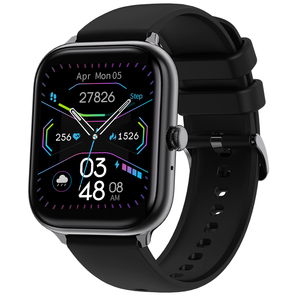
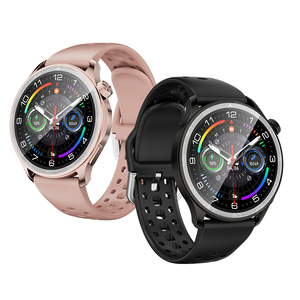
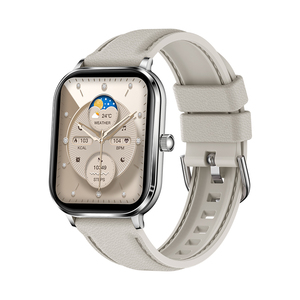
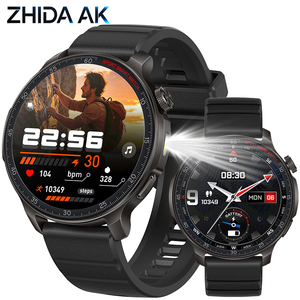
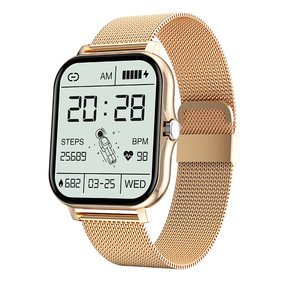
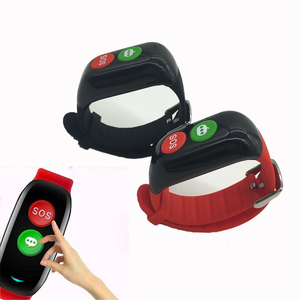
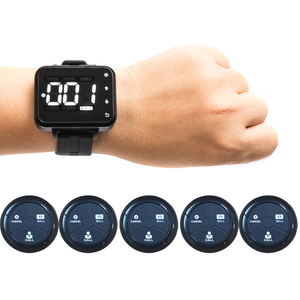
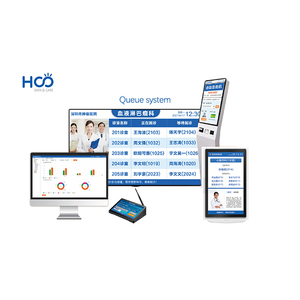
The global market for smart fitness trackers and health-monitoring wearables has evolved from basic step counting into an advanced bio-telemetry ecosystem. Over 85% of the world’s smart bands and connected fitness watches are designed, component-sourced, and assembled in China’s Greater Bay Area—primarily within the specialized hardware clusters of Shenzhen, Dongguan, and Huizhou.
For B2B procurement executives, retail brand buyers, and IoT solution integrators, navigating China’s factory landscape requires a deep understanding of OEM (Original Equipment Manufacturing) and ODM (Original Design Manufacturing) capabilities. Sourcing directly from verified Chinese factories delivers substantial cost efficiencies, rapid hardware prototyping, and direct access to state-of-the-art Photoplethysmography (PPG) optical sensor arrays, ultra-low-power Bluetooth Low Energy (BLE) System-on-Chips (SoCs), and medical-grade silicone tooling.
Shenzhen and Dongguan factories operate within a 30-kilometer component sourcing radius. Display panels, lithium-polymer batteries, casing molds, and SMT circuit boards are delivered to assembly lines within 48 hours, shortening NPI (New Product Introduction) cycles by up to 60% compared to other manufacturing hubs.
Leading China suppliers offer full white-label hardware customization. Importers can select MCU chipsets (Nordic nRF52840, Realtek RTL8763E, or Ambiq Apollo4), sensor suites, custom firmware UI, companion app branding, and retail-ready packaging adapted to regional regulatory mandates.
Top-tier factories maintain complete compliance dossiers for North American and European markets, including ASTM F963, CPSIA, EN71, EN62115, FCC, CE, RoHS, and REACH certifications. Lithium batteries are fully certified under UN38.3 standards for ocean and air logistics safety.
As consumer demand shifts from entry-level step counters toward clinical-grade health metrics, volume buyers must align their sourcing strategies with key technological transformations. Importers evaluating China wholesale suppliers should monitor five major product evolution trends over the next three-to-five years:
| Technology Vector | Legacy Baseline (2020–2023) | Next-Gen Standard (2026–2030) | Procurement Impact & B2B Value |
|---|---|---|---|
| Biometric Sensing | Single-green LED PPG (Basic HR) | Multi-channel Dual-wavelength PPG (HR, SpO2, HRV, Stress, BP Trend) | Unlocks premium price points; appeals to biohacking and health-conscious consumer segments. |
| Display Architecture | TFT LCD panels with high power drain | AMOLED & Memory-in-Pixel (MIP) displays with Always-On (AOD) | Delivers outdoor visibility, luxury aesthetics, and 3x longer battery life per charge cycle. |
| Edge Processing & AI | Cloud-dependent data processing | On-device TinyML / AI algorithm chips for instant arrhythmia alert | Ensures data privacy, zero latency, and seamless offline data recording without continuous app connection. |
| Battery & Charging | Standard Li-ion magnetic pogo pin | High-density silicon-anode cells + Fast Qi Wireless & Solar Assist | Reduces consumer RMA returns caused by corroded charging pins; enhances waterproof seals to 5ATM/IP69K. |
| Software Ecosystem | Proprietary walled-garden apps | Open API / SDK for Apple HealthKit, Google Health Connect, Strava, HIS | Enables enterprise deployments in corporate wellness, hospital nurse calls, and senior care homes. |
Modern B2B buyers are replacing single-LED optical sensors with multi-spectrum photoplethysmography (PPG) arrays integrated with green, red, and infrared light-emitting diodes. Coupled with AI-driven signal filtering algorithms, these sensors compensate for motion artifacts during high-intensity training. Suppliers are now embedding continuous blood oxygen saturation (SpO2), heart rate variability (HRV), dynamic sleep stage tracking, and estimated blood pressure trend tracking directly into low-cost wristwear.
Energy efficiency is a primary metric driving purchasing decisions. China’s leading smartwatch factories are adopting 22nm and 12nm low-power microcontrollers such as the Nordic Semiconductor nRF5340 and Ambiq Apollo4 series. Paired with high-density silicon-anode battery technology, wholesale fitness watches can now deliver 14 to 45 days of operational battery life on a single charge cycle, significantly outperforming legacy consumer smartwatches that require daily recharging.
The wholesale wearable market has bifurcated beyond general consumer fitness. Two fast-growing high-margin procurement verticals include:
To maintain margins in competitive retail markets, Chinese fitness tracker manufacturers are advancing production engineering practices. Purchasing directors evaluating factories should look for these structural capabilities:
Leading assembly lines utilize ultrasonic welding, structural adhesive dispenses, and double-ring silicone gaskets to achieve IP68, IP69K, and 5ATM water ingress ratings. This allows fitness trackers to withstand swimming, diving, and high-pressure washdown environments, eliminating humidity-induced board corrosion.
Compliance with European REACH and RoHS standards requires strict control over skin-contact materials. Tier-1 factories deploy food-grade silicone, bio-based TPU, post-consumer recycled (PCR) plastics, and nickel-free zinc/aluminum alloy casings to prevent contact dermatitis among end-users.
Our partner production facilities in China represent the apex of consumer electronic manufacturing, operating under ISO 9001 quality management systems and ISO 14001 environmental standards. We provide global brand partners with end-to-end original equipment manufacturing services backed by full regulatory transparency.
High-speed Yamaha and Fuji Surface-Mount Technology (SMT) lines ensure micro-component placement precision down to 0201 package sizes. Optical inspection (AOI) screens 100% of PCBA boards for solder bridge defects prior to final casing assembly.
Quality control follows strict Acceptance Quality Limit (AQL) standards. Every production lot undergoes button life-cycle testing (100,000+ presses), drop testing from 1.5 meters, thermal shock testing (-20°C to +60°C), and 100% water immersion testing.
Before mass production commences, physical "Golden Samples" are locked and signed by both buyer and factory engineers. Every outbound shipping carton carries unique laser-etched serial numbers and batch QR codes linked to component lot records.
Our manufactured devices are engineered to satisfy the standard testing requirements of premier North American and European retail chains. Importers receive full compliance documentation packages ready for customs clearance and retail filing:
United States Toy Safety & Heavy Metals Material Compliance
European Electric Safety & Mechanical Hazard Testing
RF Emissions, Electromagnetic Compatibility & Hazardous Substances
Safe Air & Ocean Logistics Certification for Lithium Cells
Our production architecture has successfully fulfilled volume orders for distribution networks across major global marketplaces and tier-1 retail brands, including Walmart, Target, Amazon, Macy's, Kohl's, JCPenney, Belk, Boscov's, Burlington, Bealls, Nordstrom Rack, and Learning Express. This track record demonstrates our packaging performance, sell-through stability, and minimal return rates in mature commercial markets.
Essential technical and commercial guidance for wholesale buyers, product managers, and supply chain directors sourcing fitness trackers from China.