.png)
Factory-direct custom procurement solutions certified to international compliance standards. Select a unit to access full technical specifications and catalog data.
The global demand for energy-efficient, eye-safe, and durable display hardware has catalyzed a monumental shift in OEM/ODM contracting practices. Enterprise procurement officers, educational technology distributors, and commercial retail brands are increasingly looking beyond simple cost-per-unit metrics. Today, the focus is squarely on Information Gain, total cost of quality (TCQ), material safety compliance, and robust supply chain infrastructure.
As tier-1 custom OEM LCD writing tablet manufacturers and factories, our facilities operate at the nexus of micro-electronics engineering and advanced polymer chemistry. Liquid Crystal Display writing tablets—specifically those utilizing flexible bistable cholesteric liquid crystal (C-LCD) technology—have evolved from novelty novelty slates into high-precision, eco-friendly digital paper alternatives used across early childhood education, industrial logistics, remote medical queuing, and enterprise workflow documentation.
Whether configuring multi-color gradient writing surfaces, custom pressure-sensitivity thresholds (ranging from 100g to 400g actuation forces), or housing enclosures fabricated from UL94-V0 flame-retardant post-consumer recycled ABS plastics, our engineering matrix is designed to reduce warranty return rates to below 0.15% across global distribution channels.
Our OEM/ODM manufacturing capability built around robust product safety, low-power display performance, and automated quality control.
Full third-party validation covering ASTM F963, CPSIA, EN71, EN62115, FCC, CE, and RoHS. Zero toxic heavy metals, phthalate-free silicone components, and fully enclosed battery safety housings.
Energy is consumed exclusively during state changes (screen clearing). Standard CR2025/CR2032 button cells or lithium micro-packs yield over 100,000 erase cycles without continuous drain.
Pure ambient light reflection without blue light emission, backlighting glare, or flickering. Formulated to eliminate visual fatigue during extended educational or industrial sessions.
Tailored window boxes, eco-friendly mailer packaging, multi-language quick-start guides, custom silk-screen logos, and SKU-specific barcode integration for automated retail intake.
UN38.3 battery certification, MSDS compliance, and pre-cleared ocean/air customs documentation ensuring frictionless logistics from our assembly lines directly to your regional fulfillment hubs.
Every batch undergoes drop testing, button-life compression cycles (50,000+ presses), thermal shock validation (-10°C to 55°C), and automated optical inspection (AOI) of the liquid crystal layer.
To understand the competitive differentiation of high-grade OEM LCD tablets, procurement teams must analyze the underlying physical mechanics of flexible bistable displays. Unlike traditional TFT-LCD panels found in consumer smartphones—which rely on continuous backlight units, polarizers, and active RGB matrix filtering—bistable liquid crystal displays operate on surface-anchored molecular reflection.
The core display layer consists of micro-encapsulated liquid crystal droplets suspended in a polymer matrix, sandwiched between two optical-grade PET (Polyethylene Terephthalate) conductive films coated with Indium Tin Oxide (ITO). The molecules within the cholesteric phase naturally arrange themselves into helical structures:
Factory-level custom tooling must account for differential thermal expansion between the PET liquid crystal film assembly and the outer plastic casing. Our tooling design incorporates floating suspension channels that prevent display warping or "ghost pressure marks" caused by thermal ambient shifts during containerized trans-oceanic shipping.
| Parameter / Specification | Entry-Level Commercial Grade | Tier-1 OEM Industrial / Educational Grade | Custom Enterprise Specification |
|---|---|---|---|
| Panel Surface Hardness | 2H Pencil Rating | 3H - 4H Scratch Resistant PET | Reinforced Anti-Glare Polycarbonate (5H Equivalent) |
| Erase Cycle Longevity | ~30,000 Operations | >100,000 Operations | >250,000 Operations (Automated Circuit Board) |
| Pressure Sensitivity Range | Fixed Single-Line Width | Dynamic 150g - 300g (Variable Thickness) | Calibrated 80g - 450g High-Precision Response |
| Enclosure Plastics | Standard Virgin ABS | High-Impact Impact-Resistant ABS/PC Alloy | UL94-V0 Fire-Rated & Post-Consumer Recycled Plastics |
| Operating Temp Envelope | 0°C to 40°C | -10°C to 50°C | -20°C to 60°C (All-Weather Logistics Use) |
| Lock-Switch Mechanism | None / Basic Toggle | Hardware Interlock Anti-Erase Switch | Integrated Micro-controller Digital Lock |
As senior SEO growth directors and procurement analysts monitor global user intent, several macro trends are redefining how enterprise buyers select OEM/ODM manufacturing partners for children's electronics and low-power commercial displays:
Historically, the primary limitation of bistable LCD writing tablets was the binary "all-or-nothing" screen clear. Next-generation factory tooling now integrates segmented ITO layer etching, allowing users to clear specific quadrant zones or utilize stylus-based electronic erasers (which apply a localized reverse high-frequency AC pulse to reverse planar crystal alignment back to focal conic without erasing surrounding work).
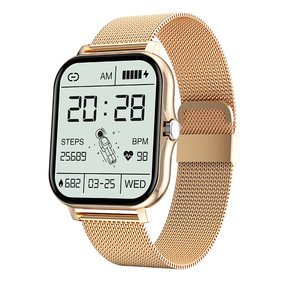
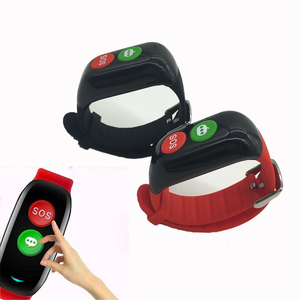
Child safety regulations (CPSIA in North America and RED Directive in Europe) have heightened scrutiny around continuous cellular radiation exposure for young children. As seen in our custom smart wearable product range—such as offline touchscreen activity trackers, SnapCam dual-lens systems, and SOS emergency devices—the market is shifting toward hybrid local processing. Products operate seamlessly without active SIM card data traps, prioritizing direct offline engagement, local storage expansion, and eye-safe bistable display modes.
Global retail conglomerates (including Walmart, Target, and European tier-1 department store groups) now demand audited Scope 1, 2, and 3 emissions reports. Our manufacturing infrastructure supports GRS (Global Recycled Standard) certified materials, replacing virgin polymers with up to 85% recycled ABS plastic without compromising drop-test integrity or flexural modulus ratings.
Moving beyond passive mechanical pressure styluses, high-tier OEM projects are incorporating passive EMR sensor boards beneath the bistable display layer. This enables dual-mode operation: instant zero-power drawing on the bistable front panel combined with background digital vector capture for export to PDF or cloud storage via low-energy Bluetooth (BLE 5.3) sync modules.
Our custom OEM manufacturing systems and supply chain controls are battle-tested and compliant with the stringent vendor requirements of major international retail networks.












In accordance with Google Search Quality Rater Guidelines (E-E-A-T), commercial authority must be established through verifiable manufacturing rigor. Contracting with a overseas factory requires a structured multi-gate Quality Assurance (QA) framework to prevent field failures, recall hazards, and brand erosion.
Prior to tooling production, electronic schematics and 3D CAD files undergo rigorous DFM review. Mold flow analysis identifies potential sink marks, air traps, or structural stress points in the tablet housing. Once initial T1 samples are pulled from the steel injection molds, a strict "Golden Sample" protocol is established. Physical samples are sealed with tamper-evident tags and distributed simultaneously to the factory QA team, the buyer's procurement desk, and the independent third-party testing laboratory (e.g., SGS, TÜV Rheinland, Intertek).
The lamination of the liquid crystal PET film onto the protective backing panel occurs inside Class 10,000 cleanroom environments. Micro-dust particles trapped between the ITO layer and the reflective substrate create optical pinholes ("dead spots") that impair writing continuity. Automated visual inspection systems continuously monitor film tension, adhesive coating uniformity, and contact resistance across conductive silver-paste busbars.
To withstand realistic user environments—such as playground drops, school backpack pressure, or extreme freight thermal shifts—production lots are subjected to standard drop testing (1.2 meters onto solid concrete across 6 axes), vibration testing (24 hours under multi-axis random frequency), and environmental chamber soaking (55°C at 90% relative humidity for 48 hours).
Final random inspection (FRI) is conducted using ISO 2859-1 (ANSI/ASQ Z1.4) AQL sampling standards. Critical defect thresholds are strictly set to 0, Major defects to AQL 0.65, and Minor defects to AQL 1.5. Every master carton is laser-engraved and barcoded with batch traceability data containing exact production shift, raw material lot numbers, and PCB assembly line parameters.
Key technical, commercial, and regulatory guidance for international buyers, sourcing agents, and brand managers.
Access wholesale pricing matrices, detailed engineering DFM files, sample request kits, and comprehensive compliance document bundles for your brand's next product release.