.png)
Explore our customizable electronics, engineered for retail buyers, healthcare providers, enterprise communication systems, and consumer electronics distributors.
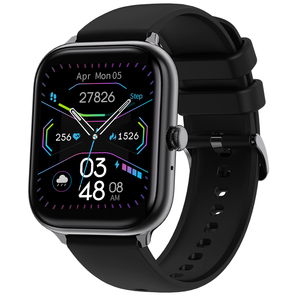
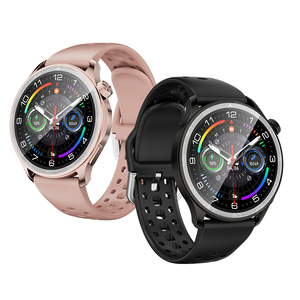
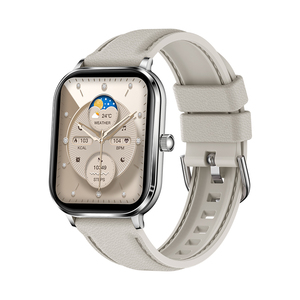
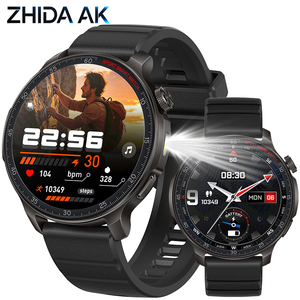
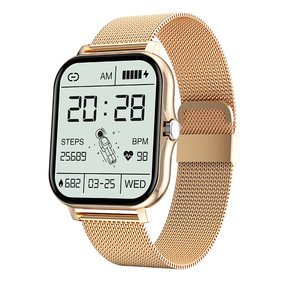
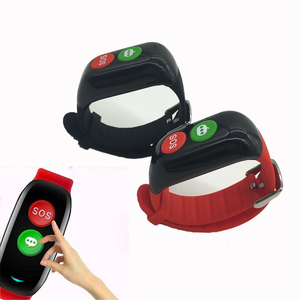
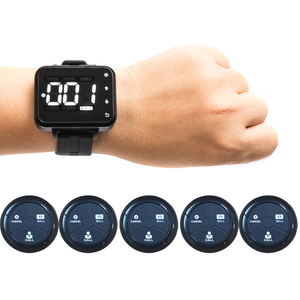
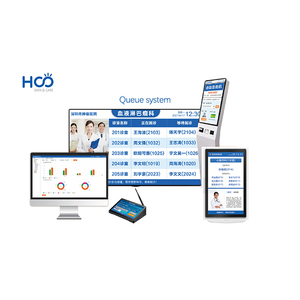
The global demand for custom video camera manufacturing has undergone a fundamental structural shift. Modern enterprise procurement teams—spanning industrial automation, consumer electronics, medical diagnostics, automotive dashcams, and sports action wearables—no longer seek simple assembly partners. Instead, market leadership demands specialized Original Equipment Manufacturers (OEM) and Original Design Manufacturers (ODM) capable of delivering complete micro-optical integration, edge AI compute capability, and robust supply chain compliance.
As a premier Custom OEM Video Camera Manufacturer & Supplier, our engineering framework merges high-precision optical lens assembly with advanced CMOS sensor tuning, Image Signal Processor (ISP) customization, and thermal dissipation control. Whether designing ultra-miniature camera modules for smart wearables, dual-lens action cameras, low-latency Wi-Fi video streaming modules, or ruggedized IP68 waterproof housings, turnkey contract manufacturing must balance optical physics with manufacturability (DFM).
When specifying custom OEM video camera hardware, supply chain directors must evaluate four critical technical layers before tooling commitment:
| Engineering Layer | Primary Technical Metrics | OEM Customization Options | Application Impact |
|---|---|---|---|
| Optical Subsystem | FOV (60°–170°), Aperture (f/1.8–f/2.8), Glass vs. Plastic (6G / 4G1P) | IR-cut filter switching, antireflective coatings, distortion correction lenses | Controls light intake, low-light sensitivity, and optical edge distortion. |
| Sensor & ISP Integration | Sony Starvis / OmniVision CIS, HDR Dynamic Range (>120dB), Pixel pitch | Custom ISP tuning profiles, auto-exposure curves, color matrix calibration | Determines color accuracy, dynamic range under backlight, and noise suppression. |
| SoC & Processor Engine | Ambarella, Novatek, Rockchip, Actions; H.265 / AV1 Encoding | Custom RTOS / Linux SDK kernel, edge AI facial/object detection models | Dictates video compression efficiency, power draw, and real-time analytical capabilities. |
| Enclosure & Ingress Protection | IP67 / IP68, IK08 impact rating, CNC aluminum alloy, PC-ABS molding | Over-molded rubber grips, custom colorway pantones, ultrasonic sealing | Ensures physical durability, shock resistance, and fluid proofing in outdoor/medical settings. |
From initial Zemax optical ray tracing to automated SMT surface mounting and final cleanroom enclosure assembly, our facilities provide total quality control.
Proprietary lens design utilizing Zemax simulations, offering custom focal lengths, wide-angle distortion-free optics, and night-vision IR illumination capabilities tailored to your exact optical requirements.
Full-stack embedded software development: customized RTOS/Linux kernels, ONVIF/RTSP streaming protocol compliance, mobile app white-label integration (iOS/Android), and cloud connectivity platforms.
Automated high-speed SMT lines equipped with 3D SPI (Solder Paste Inspection), 3D AOI (Automated Optical Inspection), and active optical lens alignment (AA) inside dust-free cleanrooms.
As enterprise procurement directors and brand owners recalibrate their international sourcing strategies, video camera OEM selection criteria are evolving rapidly. Driven by advances in artificial intelligence, low-power semiconductors, and stringent global privacy legislation, the next decade of video camera procurement will be dominated by five critical trends:
Traditional video cameras rely heavily on high-bandwidth video streaming to centralized cloud servers for image analytics. However, bandwidth costs, latency, and privacy compliance (GDPR/CCPA) have pushed the industry toward Edge AI Processing. Modern OEM video camera designs integrate Neural Processing Units (NPUs) directly onto the camera motherboard, enabling localized facial recognition, vehicle telemetry, fall detection, and gesture sensing at power budgets under 1.5 Watts.
Consumer devices—including kids' smartwatches, sports action cameras, elderly alert systems, and wireless clinic calling hardware—demand extended battery operating lifecycles without sacrificing reliability. OEM manufacturers are adopting ultra-low power standby architecture, dynamic frame-rate switching (shifting from 60fps active to 1fps standby), and efficient LiPo battery management circuits (BMS) with UN38.3 freight safety compliance.
Single-lens visual modules are increasingly giving way to dual-lens and multi-sensor configurations. Dual-lens layouts allow simultaneous capture of wide-angle context and telephoto detail (or front/rear coverage in kids SnapCam Duo platforms and automotive recorders). Furthermore, optical visual capture is increasingly paired with auxiliary sensors: PPG heart rate monitors, SpO2 blood oxygen sensors, GPS location tracking, and RF emergency buzzers for hybrid smart devices.
To eliminate field failures, brand reputation risks, and retail store returns, our factory operates a strict multi-tier Quality Management System (QMS) aligned with ISO 9001, IATF 16949, and international consumer electronics safety mandates.
Our OEM camera and wearable products are certified to meet international regulatory frameworks across North America, Europe, and Asia-Pacific markets:
Fully compliant with ASTM F963, CPSIA (lead and phthalate limits), EN71 Parts 1-3, and EN62115 for electrical safety in children's electronic learning and camera devices.
Certified to FCC Part 15B/15C, CE-EMC/RED, RoHS 2.0, REACH, and UN38.3 / MSDS for global air and ocean freight logistics consolidation.
Direct technical and commercial answers for enterprise procurement managers, retail buyers, and product development engineers.
A: Standard OEM custom packaging and colorway customization typically starts at an MOQ of 1,000 to 2,000 units per batch. For full ODM projects requiring custom plastics tooling, ID engineering, and custom PCB layout, initial production runs start at 3,000 to 5,000 units depending on component specification.
A: Prototype samples using existing enclosure molds and modified firmware take approximately 7–14 days. Full ODM projects—including industrial design, 3D mold tooling fabrication, T1 plastic samples, DVT testing, and golden sample sign-off—typically require 35 to 45 calendar days.
A: Yes. Our in-house optical engineers perform custom ISP calibration inside an ultrasonic optical lab. We can fine-tune auto-white balance (AWB), dynamic range, low-light gain curves, sharp edge enhancements, and distortion correction tailored for indoor clinic lighting, outdoor bright sunlight, or low-light night conditions.
A: We operate under strict legally binding Non-Disclosure Agreements (NDAs). All custom tooling molds, firmware source code, Gerber files, and proprietary ID housings remain the exclusive intellectual property of the client. We do not sell proprietary client-funded designs to third parties.
A: We manufacture both offline-first non-SIM devices (focusing on local micro-SD storage, direct RF emergency paging, and standalone play) as well as connected 4G LTE IoT variants with SIM/eSIM support. Buyers can choose the exact connectivity architecture based on their target market pricing strategy.
A: Every production batch is backed by our standard 12-to-24 month factory limited warranty. We provide direct replacement unit buffers (0.5%–1% spare parts/units per shipping container) or factory RMA refurbishment services to ensure seamless customer service for your retail partners.
Whether you are scaling a national consumer electronics brand, developing specialized enterprise vision hardware, or expanding your retail electronics aisle, our engineering and manufacturing teams are ready to realize your vision.