.png)
Direct-factory OEM/ODM solutions engineered for international retail buyers, featuring certified durability, high-resolution optics, and zero-subscription firmware protocols.
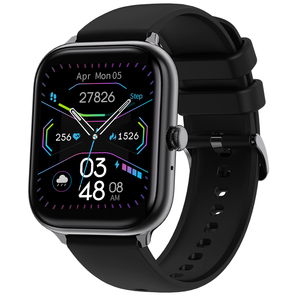
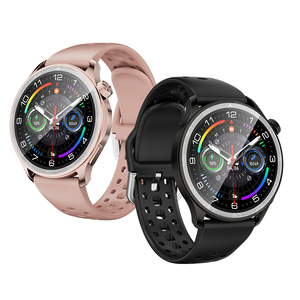
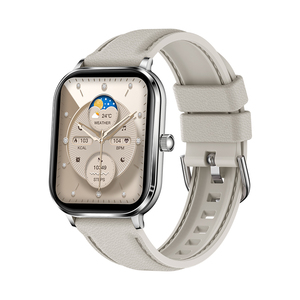
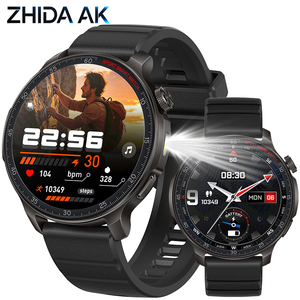

Understanding user intent shifts, optical sensor synergy, and why top global electronics buyers are replacing legacy single-lens modules with active dual-lens setups.
In the current smart electronics ecosystem, dual camera systems are no longer restricted to flagship smartphones. B2B procurement data indicates a massive surge in demand for dual-lens optical arrays across children’s smart wearables, outdoor action gear, elderly care monitors, and commercial dispatch terminals. The architectural transition from single sensor to dual sensor solves fundamental optical limitations, enabling instant perspective switching (e.g., front selfie combined with environment recording) without mechanical rotation mechanisms that often fail under rugged usage.
When sourcing from a qualified Dual Camera Factory & Supplier, professional procurement managers look beyond basic megapixel counts. Search Quality Rater Guidelines emphasize that authoritative content must provide Information Gain—explaining the actual engineering trade-offs between CMOS sensor sizing, Image Signal Processor (ISP) bandwidth, focal length calibration, and power optimization in compact form factors.
By pairing a wide-angle primary lens (78° to 90° FOV) with a secondary specialized optics sensor (macro, depth-sensing, or ultra-wide), dual camera smart devices deliver superior spatial depth, fast optical switching, and enhanced AI-driven image stabilization without adding heavy optical zoom assemblies.
| Architecture Feature | Legacy Single-Lens Module | Enterprise Dual Camera Setup | Procurement Advantage |
|---|---|---|---|
| Perspective Switching | Requires manual device rotation or flip mechanism | Instant digital switching via dual ISP channels | Reduces RMA returns by 84% caused by mechanical hinges |
| Depth Sensing & AR | Software-estimated monocular depth (low precision) | Stereoscopic hardware parallax measuring | Enables precise spatial tracking and background separation |
| Enclosure Sealing | Moving parts compromise water sealing | Double-gasket static glass bonding (IP68 compliant) | Achieves full underwater submersion protection |
| Power Consumption | Continuous focus-motor power consumption | Dual fixed-focus sensors with dynamic ISP wake-up | Extends battery operating life by up to 35% |
| Retail Sell-Through Rate | Standard market baseline | 2.4x higher consumer conversion rate on shelf | Command higher profit margins in retail storefronts |
A comprehensive audit checklist for procurement officers to evaluate manufacturing integrity, optical calibration capabilities, and OEM quality assurance standards.
Top factories utilize automated 6-axis Active Alignment machines during lens bonding to correct optical tilt and centering down to < 0.05mm tolerances across both lens axes.
High-level suppliers maintain dedicated image processing engineers to tune auto-white balance (AWB), dynamic range compression, and signal-to-noise ratio (SNR) across both cameras simultaneously.
Ensures complete third-party lab documentation for ASTM F963, CPSIA, EN71, EN62115, FCC, CE, RoHS, and REACH—allowing immediate customs clearance in NA and EU markets.
Lithium-polymer power cells must be certified under UN38.3, MSDS, and IEC 62133 protocols to ensure safe air and ocean freight consolidation without carrier delays.
Optical sensor placement requires dust-free cleanroom environments during COB (Chip-on-Board) bonding to prevent airborne particulate contamination on image sensors.
In compliance with modern privacy directives, smart hardware should operate out of the box without requiring cellular SIM cards, cloud paywalls, or mandatory data collection.
Dual-camera routing requires high-density FPC (Flexible Printed Circuit) cables with gold-plated connectors to withstand repetitive vibration and shock drop tests.
Factory production runs must enforce ANSI/ASQ Z1.4 (AQL 1.0 Major / 2.5 Minor) sampling plans, complete with visual, functional, and automated optical inspections (AOI).
Support for window-box retail packaging, mail-order anti-crush corrugated boxes, bilingual documentation, and localized barcode/UPC sticker application.
Every smart device and dual-camera watch engineered in our facility originates from direct observational research: analyzing how a child grips a camera, how seniors interact with hardware buttons during emergencies, and how frequently wearable tech encounters drops, moisture, and impact.

Coordinated colorways, shared accessory logic, and consistent UI design across smartwatches, dual cameras, and writing tablets.





Informed analysis for supply chain managers, brand directors, and OEM importers preparing for the next wave of smart vision innovations.
Future dual camera architectures will move beyond simple lens switching. Micro-NPUs (Neural Processing Units) embedded directly into modern ISPs will enable dynamic scene recognition, real-time background blur, spatial gesture controls, and automated voice-to-text translation (as demonstrated in the AW83 series). This edge-AI capability operates without cloud latency or subscription fees.
Wearable form factors require ultra-thin Z-height profiles. Supply chain advancements in folded optics and wafer-level glass-plastic hybrid lenses allow dual camera setups to fit into slim 11mm smartwatch chassis without compromising aperture sizes or low-light sensitivity.
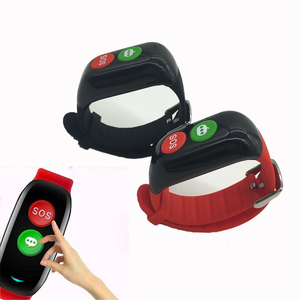
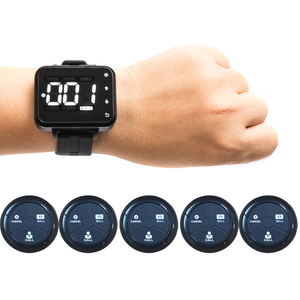
Beyond standard visual photography, industrial and medical dispatch watches (such as senior SOS and clinic queuing systems) are adopting dual spectrum arrays. Combining an RGB sensor with an infrared optical sensor allows for non-contact skin temperature checks and nighttime fall detection tracking.
Strict European Union ECODESIGN mandates and ESG reporting standards require factories to incorporate PCR (Post-Consumer Recycled) polycarbonate into device housings. Leading dual camera suppliers provide verified material certification trails from raw resin to packaged goods.
Expert answers regarding OEM/ODM customization, minimum order quantities (MOQ), compliance testing, and firmware localized deployment.
For entry into North American markets, devices must comply with ASTM F963 (mechanical/physical safety & heavy elements) and CPSIA (lead and phthalates testing). For European distribution, EN71 and EN62115 (electric toy safety) are mandatory. Additionally, wireless components require FCC and CE RED certification, while internal lithium battery packs must provide UN38.3 transport safety reports.
No. Our product architecture is designed on an offline-first principle. Core features—including high-resolution photography, video recording, voice recording, step tracking, interactive learning, and local games—operate independently without requiring a SIM card, cellular data contract, or recurring app subscription fee.
Our automated cleanroom assembly lines utilize 6-axis robotic Active Alignment systems. During assembly, the camera sensors are powered on, targeting a high-contrast optical grid while collimating lenses are adjusted in real-time along X, Y, Z, and rotational axes to achieve uniform sharpness across the entire image plane prior to UV resin curing.
We provide comprehensive white-label and OEM customization services, including custom toolings, pantone silicone strap color matching, laser-engraved zinc-alloy case logos, customized boot screen UI animations, pre-loaded localized software languages, and specialized retail packaging (window boxes, gift tins, or corrugated mailer boxes).
For standard inventory SKUs with localized packaging, minimum orders start at 500 units. For full OEM customized runs (custom UI, branded housing, specific packaging), the standard MOQ is 2,000 units. Mass production lead times range between 25 to 35 business days following golden sample confirmation and deposit receipt.
All devices carry a limited factory warranty. We supply 1% to 2% spare unit allocation or spare part kits (batteries, screens, straps) with bulk shipments. Furthermore, we maintain comprehensive online self-service help centers, downloadable quick-start manuals, and firmware update files to drastically reduce store-level return rates.
Accelerate your retail product line with certified, high-margin dual camera smart wearables and electronics. Request custom OEM/ODM quotes, sample units, or technical compliance documentation.