.png)
The global consumer electronics market is witnessing a massive resurgence in physical print media, fueled by the rapid convergence of digital image processing, CMOS sensor cost efficiency, and thermal zero-ink printing technology. According to recent B2B trade data, the demand for instant print cameras and hybrid digital-thermal cameras grew by over 24.8% year-over-year. Retail procurement officers, toy distributors, and private-label brand managers face a critical imperative: identifying compliant, high-yield, and innovative manufacturing partners capable of balancing stringent child-safety regulations with cut-throat unit economics.
This comprehensive industry whitepaper provides an analytical evaluation of the global supply chain, evaluating manufacturing infrastructure, component bill-of-materials (BOM) transparency, firmware stability, and international compliance standards including ASTM F963, CPSIA, EN71, EN62115, FCC, and RoHS. Whether you are expanding a tier-1 retail portfolio or building an OEM private label, this guide establishes the definitive framework for instant camera procurement.
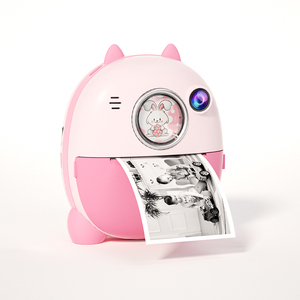
Explore our curated benchmark selection of direct-factory instant cameras engineered for international retail chains, gift markets, and educational toy distributors.
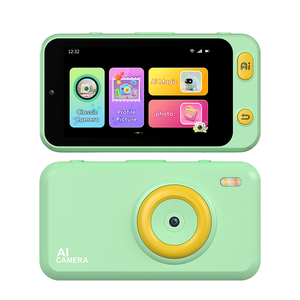
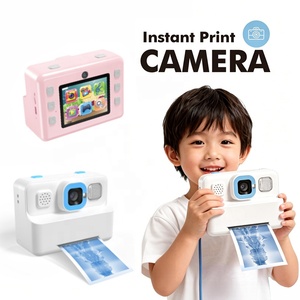
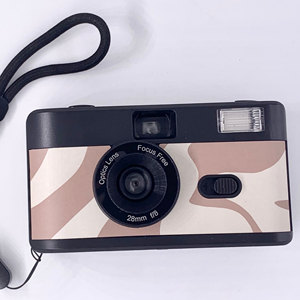
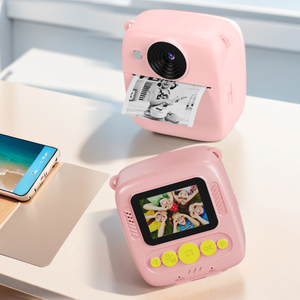

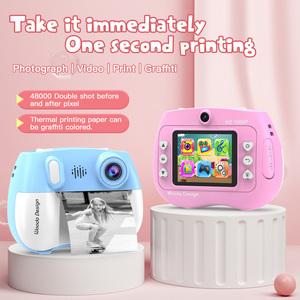
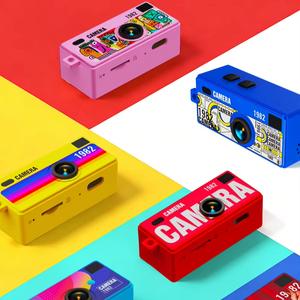
As retail buyers shift away from legacy analog chemistry due to rising chemical costs and environmental overhead, direct thermal printing and hybrid digital technologies have emerged as the dominant force in high-volume instant imaging. B2B buyers must align their procurement strategies with four key technological and regulatory developments:
Modern instant cameras leverage direct thermal line heads operating at 203 DPI to 300 DPI resolution. By eliminating expensive ink cartridges and liquid developing chemicals, thermal cameras reduce consumable cost-per-print from $1.00+ down to less than $0.02 per sheet. Advanced print engines now incorporate dynamic thermal density control, preventing burnout and extending head life to over 50,000 prints.
Global chemical safety mandates (EU REACH, California Proposition 65) have forced a structural shift toward non-toxic thermal paper rolls. Leading OEM suppliers now supply strictly BPA-free and BPS-free thermal paper, ensuring that young users can handle, color, and preserve printed memories without chemical exposure risks.
The market has rapidly transitioned from single-lens point-and-shoot mechanisms to dual-lens front/rear configurations. Powered by integrated Image Signal Processors (ISPs), these units support real-time digital frames, color filters, micro-SD video recording, and instant previewing on high-luminance IPS screens before committing to physical print.
To streamline supplier audits, our engineering team evaluated leading production lines across critical parameters including SMT assembly capabilities, optical calibration standards, defect ratios, and regulatory compliance infrastructure.
| Supplier Rank & Category | Core Sensor & Display Specs | Print Mechanism & Speed | Safety Certifications | Recommended Retail Segment |
|---|---|---|---|---|
| Tier-1 OEM Leader (Playzoom Tech) | 13MP / Dual-Lens CMOS / 2.4–4.0" IPS Screen | Direct Thermal (Zero-Ink), < 3 Sec/Print | ASTM F963, CPSIA, EN71, FCC, UN38.3 | Big-Box National Chains (Walmart, Target, Amazon) |
| Tier-2 Mid-Volume Assembly Plant | 8MP / Single CMOS / 2.0" LCD Screen | Standard Thermal Engine, 5 Sec/Print | CE, RoHS, basic FCC | Regional Supermarkets & E-commerce Sellers |
| Tier-3 Analog Retro Specialist | Fixed Focus Optical / Optical Viewfinder | 35mm Film / Instant Chemical Sheet | General Consumer Electronics Standard | Niche Vintage & Boutique Gift Outlets |
| Tier-4 Low-Cost White-Label ODM | 2MP to 5MP / Micro LCD Display | Low-Density Thermal, 6-8 Sec/Print | Basic Factory CE Declaration | Promotional Giveaways & Budget Marketplaces |
As a recognized leader in children's smart electronics and digital imaging devices, our manufacturing enterprise combines rigorous European/American compliance frameworks with streamlined OEM/ODM customization workflows. Our products are engineered specifically around observed child ergonomics, physical durability requirements, and zero-friction point-of-sale functionality.
Every production batch undergoes third-party lab verification against ASTM F963 and CPSIA regulations for the United States, alongside EN71 and EN62115 standards for the European Union. Housings utilize rounded geometry, drop-proof ABS plastics, and non-toxic food-grade silicone straps.
Unlike IoT devices that mandate SIM cards, cellular data plans, or cloud subscription sign-ups, our instant cameras operate entirely offline. This eliminates recurring consumer costs, guarantees maximum child privacy, and simplifies retail merchandising across global storefronts.
Equipped with Grade-A rechargeable lithium polymer cells, all models include certified protection ICs against overcharging and short-circuiting. Full UN38.3 and MSDS documentation ensures hassle-free ocean and air freight consolidation to major logistics hubs worldwide.
Our production lines consistently supply North America's and Europe's largest department stores and mass retailers—including Walmart, Target, Amazon, Macy's, Kohl's, JCPenney, Belk, Boscov's, Burlington, Nordstrom Rack, and Learning Express.
Every manufacturing run follows stringent Acceptable Quality Limit (AQL Level II) sampling plans. In-line testing covers lens alignment, thermal printer head duty cycles, button-cycling endurance, drop/tumble resistance, and display color uniformity before master carton sealing.
From localized UI firmware and multilingual instruction manuals to retail-ready window boxes, clamshell-free eco-pack options, and custom branded thermal paper rolls, we provide complete end-to-end private labeling support.
When evaluating instant camera factory quotes, procurement managers must look beyond superficial casing aesthetics to audit the fundamental hardware architecture. Below is an engineering teardown of critical component selection metrics:
Low-tier suppliers frequently employ interpolated VGA sensors upscaling to 8MP or 12MP, resulting in grainy images and severe motion blur. High-grade instant camera factories utilize native 1/4" or 1/3" CMOS sensors (such as SmartSens or GC series) paired with multi-layer glass-composite lenses (4P optical geometry). This ensures sharp contrast and vivid color reproduction prior to thermal conversion.
The heart of any direct print instant camera is its Thermal Printer Head. High-performance factories integrate TPH components rated for 50 kilometers of print paper travel with a thermal pulse lifespan exceeding 100 million pulses. Look for factories offering resolution options between 203 DPI (ideal for crisp line drawings and high-contrast photos) and 300 DPI (suitable for complex shading and fine text rendering).
Because thermal printing requires high instantaneous current spikes (up to 2.5A to 3.0A during heat-pulse cycles), poor battery management can lead to voltage drops, system resets, or thermal runaway. Qualified suppliers equip their battery packs with dual-MOSFET protection boards, NTC thermistors for real-time temperature monitoring, and USB Type-C fast-charging controllers compliant with IEC 62133 safety benchmarks.
Our instant camera products are fully tested by accredited third-party laboratories (such as SGS, TÜV, and Intertek) against US market requirements (ASTM F963, CPSIA) and European directives (EN71 Parts 1-3, EN62115 for electric toys, CE, RoHS, REACH). Furthermore, electromagnetic compatibility is verified under FCC Part 15B, and lithium battery cells carry complete UN38.3 and MSDS documentation for seamless air and ocean freight transportation.
Direct thermal zero-ink printing offers a massive cost advantage over traditional chemistry film. A standard roll of thermal print paper yields approximately 60–80 photos at a cost of less than $0.02 per image, compared to $0.75–$1.50 per image for silver-halide instant film. Additionally, high-grade BPA-free thermal paper has a shelf life of up to 10 years when stored away from direct UV radiation and excessive humidity.
No. All core functionality—including digital photo capture, real-time thermal printing, image frame selection, video recording, and offline mini-games—operates independently out of the box. There are no mandatory app downloads, no SIM cards required, and zero subscription paywalls, making them 100% kid-safe and ready for retail sale.
We offer comprehensive OEM/ODM customization across hardware, software, and packaging. Options include custom silicone sleeve injection molding, localized multilingual UI firmware, customized boot logo screens, proprietary photo frame overlay designs, custom branded thermal paper cores, and retail window-box or mailer packaging architecture tailored to your brand standards.
We enforce strict AQL Level II inspection guidelines across raw material incoming quality control (IQC), in-line SMT assembly (IPQC), and final pre-shipment random audits (FQC). All products are backed by our manufacturer limited warranty. In addition, we provide downloadable digital user manuals, troubleshooting guides, and online self-service support to minimize store return rates for retail partners.
Standard OEM production runs start at an accessible MOQ of 1,000 units per colorway/model for customized packaging and branding. Standard tooling and stock color configurations can accommodate smaller trial orders. Typical mass production lead time ranges between 25 to 35 calendar days following golden sample sign-off and deposit confirmation.
Connect directly with our engineering and procurement team to request full compliance documentation, factory audit reports, complete bill-of-materials breakdowns, and competitive volume pricing schedules.