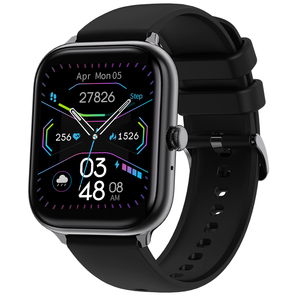
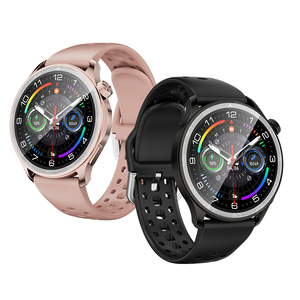
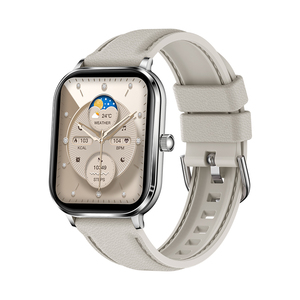
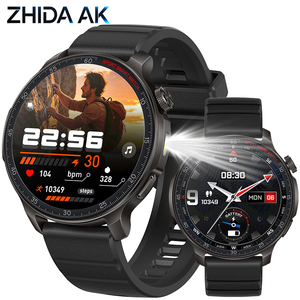
.png)
Explore our premium OEM/ODM product lineup engineered for retail buyers, brand owners, and global distributors.
The global market for miniature cameras, wearable imaging electronics, and integrated smart visual hardware has undergone a structural transformation over the past five years. Driven by rapid advancements in CMOS image sensor miniaturization, micro-display interfaces, and high-efficiency System-on-Chip (SoC) architectures, China—specifically the Greater Bay Area optical cluster spanning Shenzhen, Dongguan, and Huizhou—has emerged as the undisputed epicenter for original equipment manufacturing (OEM) and original design manufacturing (ODM) in the mini camera ecosystem.
For international procurement directors, retail category managers, and private-label brand owners, sourcing from top-tier China mini camera suppliers requires evaluating far more than unit costs. Navigating the modern sourcing landscape demands a thorough understanding of silicon-level image signal processing (ISP), optical lens distortion control, thermal management within sub-50g enclosures, battery energy density compliance, and international regulatory frameworks spanning ASTM F963, CPSIA, EN71, FCC, CE, and RoHS standards.
Key Procurement Insight: Leading B2B buyers are pivoting from component-cost negotiation toward full-lifecycle quality assurance, prioritizing factories with integrated SMT placement lines, 10,000-class cleanroom optical alignment, and turnkey firmware customization capabilities.
This comprehensive industry whitepaper provides enterprise buyers with an authoritative analysis of China's top mini camera manufacturing hubs, key procurement criteria, engineering trends for 2026-2030, compliance benchmarks, and structured evaluation frameworks to mitigate supply chain risks while optimizing information gain and product margin performance.
As consumer demand shifts toward compact, multi-functional imaging solutions—ranging from action sports cams and dual-lens selfie cameras for kids to wearable health monitors and wireless alert systems—manufacturing technology is evolving rapidly. Key technological trends driving procurement strategies include:
Next-generation mini cameras integrate edge-AI processing chips capable of real-time image stabilization, facial recognition, and low-light noise reduction directly on the micro-DSP, reducing power draw by up to 40%.
The market is rapidly adopting dual-lens configurations (front/rear switching and optical-zoom pairs) engineered into ultra-compact housings without adding weight or thermal throttle bottlenecks.
Retail buyers are increasingly requesting subscription-free hardware that operates without SIM cards or cloud paywalls, protecting privacy while offering instant out-of-the-box utility for consumers.
Adoption of specialized polymer lithium-ion battery formulations with UN38.3 transport safety compliance, providing longer operational runtimes in miniature form factors under 1000mAh.
Shift toward phthalate-free, non-toxic ABS/silicone enclosures, IP67/IP68 ingress protection, and drop-tested shockproof chassis capable of surviving severe physical impacts and environmental stress.
When selecting a China mini camera manufacturer, enterprise buyers must evaluate the underlying hardware architecture to ensure component reliability, thermal stability, and long-term production availability. Below is a comparative technical matrix analyzing standard vs. premium mini camera hardware configurations:
| Hardware Component | Standard OEM Specifications | High-End ODM Industrial Grade | Impact on Procurement & RMA |
|---|---|---|---|
| Main Processor (SoC) | Single-core 32-bit DSP (Generalplus / JL) | Dual-core 64-bit Edge-AI SoC (Novatek / Rockchip / HiSilicon) | Determines frame rate stability, battery efficiency, and multitasking capability. |
| Image Sensor (CMOS) | 1/4" GC series (0.3MP - 2MP interpolated) | 1/2.8" Sony STARVIS / OV true 1080P/4K sensor | Directly impacts signal-to-noise ratio, color reproduction, and low-light performance. |
| Lens Structure | 2G2P (2 Glass + 2 Plastic) optical stack | 6G Full-Glass / HD IR-cut optical filter stack | Prevents lens yellowing over time, reduces optical flare, and maintains edge sharpness. |
| Enclosure & Ingress | Standard recycled ABS plastic (IP54) | Virgin PC/ABS + Food-grade liquid silicone (IP68) | Crucial for passing ASTM F963 toxicity tests and surviving 1.5m drop impact tests. |
| Power Management | Standard LDO charge controller | Precision PMIC with thermal shutdown & overcharge protection | Extends overall battery cycle life and prevents thermal runaway risks during fast charging. |
By specifying high-grade components during the Request for Proposal (RFP) stage, procurement teams can significantly reduce return rates (RMA) from an industry average of 4.5% down to under 0.3%.
Exporting electronic hardware into highly regulated consumer markets such as North America, Europe, and Asia-Pacific requires seamless compliance documentation. A reputable China mini camera manufacturer must maintain a robust quality management system (QMS) certified to ISO 9001:2015 and ISO 14001 guidelines.
Before issuing purchase orders, compliance teams should verify that the factory holds accredited third-party test reports (such as SGS, TÜV Rheinland, or Intertek) covering the following standards:
ASTM F963 & CPSIA: Mandatory physical, mechanical, and heavy metals (lead, phthalates) safety testing for youth electronics and wearable devices.
FCC Part 15: Electromagnetic interference verification for digital devices.
EN71 & EN62115: Safety of electric toys and wearable micro-electronics.
CE, RoHS & REACH: Restricted chemical substances audit, hazardous material limits, and radio spectrum efficiency.
UN38.3 & MSDS: Comprehensive battery cell transport documentation for air and ocean freight consolidation.
IEC 62133: Safety requirements for portable sealed secondary lithium cells.
In-House Factory Reliability Testing: Professional factories perform rigorous internal testing on production batches, including 5,000-cycle button press tests, 1.2m drop-tumble tests, salt-spray corrosion tests, and thermal chamber cycling from -20°C to +65°C.
Executing a custom mini camera or wearable smart device project requires a structured, milestone-driven production roadmap. Below is the standard engineering and manufacturing timeline executed by top China mini camera suppliers:
| Phase | Milestone Activity | Key Deliverables | Typical Timeline |
|---|---|---|---|
| Phase 1 | Industrial Design (ID) & Mechanical Engineering (MD) | 3D CAD models, ergonomic hand-feel mocks, structural stress analysis. | 10 – 15 Days |
| Phase 2 | Tooling & Mold Fabrication | High-precision steel injection molds, plastic casing T1 samples. | 25 – 35 Days |
| Phase 3 | PCB Layout & Firmware Customization | Schematic design, UI/UX localized menu firmware, SMT stencil. | 15 – 20 Days |
| Phase 4 | Golden Sample Approval & Lab Certification | Final pre-production units, ASTM/CPSIA/CE lab compliance passes. | 10 – 14 Days |
| Phase 5 | Mass Production & In-Line QC Inspection | High-speed SMT assembly, automated optical inspection (AOI), aging tests. | 20 – 25 Days |
| Phase 6 | Final Random Inspection (FRI) & Logistics | AQL 1.0/2.5 photographic inspection reports, palletizing, container loading. | 3 – 5 Days |
Addressing core technical, logistical, and commercial inquiries during supplier evaluation: