.png)
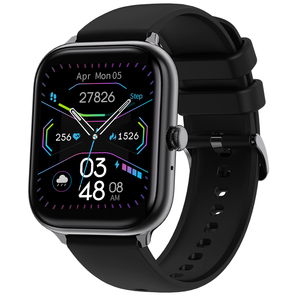
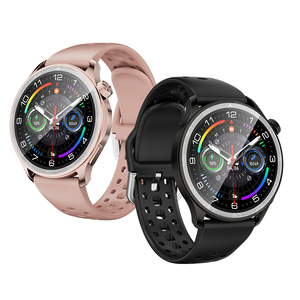
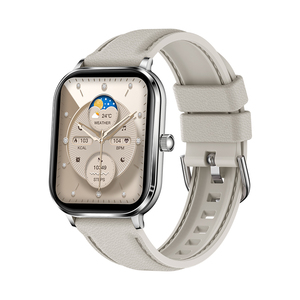
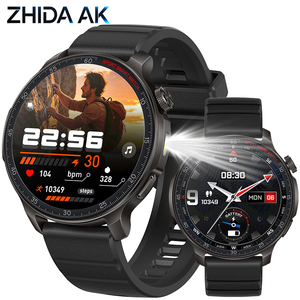
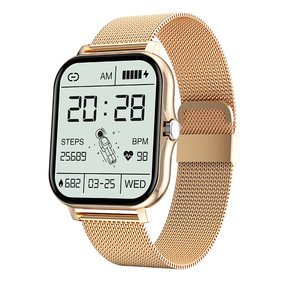
Executive Summary: The Changing Landscape of Children's Wearables in Greater Boston
The commercial ecosystem for children’s wearable technology in North America—specifically across Greater Boston, Massachusetts, and the broader New England region—is undergoing a profound structural shift. Driven by heightened parental awareness regarding digital privacy, increasing state-level school phone bans, and a demand for non-addictive, educational technology, retail buyers and B2B procurement managers are re-evaluating their sourcing strategies.
As a Boston-based importer, corporate brand owner, or retail purchasing director (supplying chains from Walmart and Target to regional specialty toy retailers like Learning Express), establishing a direct, verified supply chain with top-tier Chinese child watch manufacturers is no longer merely about cost arbitrage. It is about Information Gain, engineering integrity, material safety compliance, and seamless operational logistics from the manufacturing hubs of Shenzhen and Dongguan straight to Logan International Airport (BOS) and the Port of Boston (Conley Terminal).
1. Semantic Search Analysis & User Intent Mining: What Boston B2B Buyers Require
Understanding user intent in the B2B smartwatch sector requires analyzing the operational pain points of procurement officers, compliance directors, and retail category managers. When enterprise decision-makers search for "China Child Watch Manufacturers in Boston", their search intent spans four critical pillars:
- Regulatory Immunity & Data Security: How do these devices guarantee compliance with the Children’s Online Privacy Protection Act (COPPA), avoiding unencrypted cloud servers and unvetted third-party tracking apps?
- Physical & Material Durability: Are the wristbands constructed from non-toxic, food-grade silicone compliant with FDA and CPSIA heavy-metal thresholds, capable of surviving harsh winter environments and intense playground impact?
- Supply Chain Friction Reduction: What are the exact lead times, AQL inspection standards (0.4 critical / 1.0 major), minimum order quantities (MOQs), and DDP (Delivered Duty Paid) shipping protocols into Massachusetts distribution centers?
- Retail Merchandising Compatibility: Does the supplier provide retail-ready window-box packaging, UPC barcode integration, and bilingual user manuals that minimize store return rates?
2. Engineering Standards: Hardware Breakdown of China’s Premier Smartwatch Manufacturing
The leading smart wearable factories in China operate at ISO9001, BSCI, and Disney FAMA-certified standards. Below is an engineering comparison of the core components utilized in high-grade children’s watches versus commodity consumer grade wearables:
| Component Module | Tier-1 China Factory Standard (Playzoom Specification) | Generic Commodity Standard | Impact on Boston Retailers & Distributers |
|---|---|---|---|
| Display Panel | 2.5D Curved IPS / AMOLED with Shatterproof Tempered Glass | Standard TN Flat Screen (Prone to cracking) | Reduces shipping breakage & end-user warranty returns by over 85%. |
| Battery Chemistry | UN38.3 & UL2054 Certified Li-Polymer with Seiko IC Guard Board | Uncertified Lithium-Ion (Risk of thermal expansion) | Passes US Customs smoothly; eliminates liability risks for commercial importers. |
| Enclosure & Strap | Hypoallergenic TPU / FDA Food-Grade Silicone (Phthalate-Free) | Recycled PVC Plastics (May cause skin irritation) | Meets California Prop 65 and CPSIA Section 101 heavy-metal tests. |
| Positioning Chipset | Broadcom / MediaTek Tri-Mode (GPS + Wi-Fi + Cell LBS) | LBS Only (Single-tower tracking with 2km error radius) | Delivers sub-5 meter location accuracy in dense urban areas like Back Bay. |
| Waterproofing | Sonic-Welded Casing with IP67/IP68 Silicone Gaskets | Basic Snap-Fit IP54 (Vulnerable to handwashing/rain) | Ensures multi-season survival against snow, slush, and water splash exposure. |
3. Localized Application Scenarios Across Greater Boston
To maximize retail sell-through and brand positioning, products must align directly with the daily routines and geographical realities of families in the New England area:
Scenario A: School District Compliance & Cellular-Free Classrooms
With public and private school districts across Massachusetts (including Boston Public Schools, Newton, and Brookline) enforcing strict bans on smartphones in classrooms, parents still require a reliable means to ensure their child’s safety during after-school commutes. Specialized offline smartwatches—featuring step counters, interactive educational games, voice recorders, and digital time-telling without cellular internet access—allow retail partners to market a "school-approved" wearable. Conversely, 4G LTE models equipped with parental "Classroom Mode" allow tracking while completely locking screen interactions during school hours.
Scenario B: Transit & Urban Geofencing in Metropolitan Boston
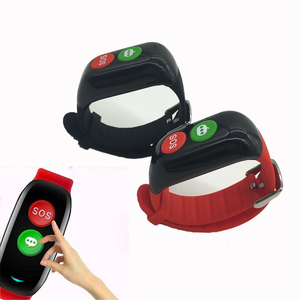
Navigating the MBTA subway system, commuting through South Station, or taking family trips to the Museum of Science requires real-time safety measures. OEM watches featuring customized safe-zone geofencing send automated alerts to parents' smartphones if a child strays outside a pre-defined 50-meter radius. Integrated emergency SOS buttons allow children to initiate an instant 3-number sequential call cascade at the press of a single button.
Scenario C: Clinical & Elderly Care Expansion in Massachusetts Healthcare Corridors
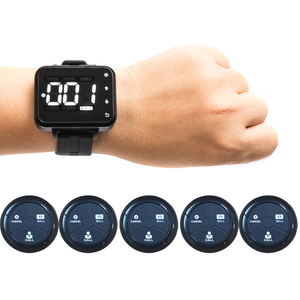
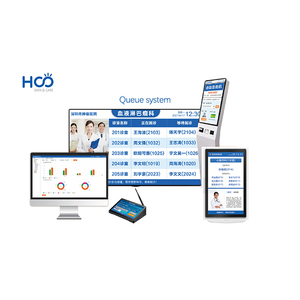
Beyond pediatric applications, Boston’s world-renowned medical hub (including Longwood Medical Area institutions) utilizes specialized RF receiver watch systems (such as Models 7 and 8 shown above). These devices serve as low-latency, wireless nurse-calling and patient queuing bracelets in outpatient clinics, reducing wait-time bottlenecks and enhancing caregiver responsiveness without requiring complex network infrastructure.
4. Comprehensive OEM/ODM Sourcing Workflow for Boston Buyers
Partnering directly with a qualified Chinese manufacturer involves a structured 6-phase engineering and procurement roadmap designed to guarantee quality and regulatory compliance:
Phase 1: Industrial Design & Tooling Validation
Clients select from existing factory-owned molds to minimize initial tooling capital expenditure or opt for custom ODM chassis development. 3D stereolithography (SLA) prototypes are produced within 72 hours for ergonomic testing against pediatric wrist dimensions.
Phase 2: Firmware Localization & GUI Customization
Firmware is flashed with customized language packs (English, Spanish, French, Portuguese), tailored watch-face graphics, and branded boot-up animations. Offline educational games are integrated directly onto the ROM to eliminate external server reliance.
Phase 3: Lab Testing & Certification Filing
Golden samples are submitted to accredited third-party testing agencies (such as SGS, Intertek, or TÜV Rheinland). Testing verifies compliance with:
- ASTM F963-17: Physical and mechanical safety, small parts hazards, and heavy elements analysis.
- CPSIA Title I, Section 101 & 108: Total lead content and phthalates restriction in accessible child components.
- FCC Part 15B / 15C: Unintentional radiators and intentional wireless radiation limits (SAR rate under 1.6 W/kg).
- UN38.3 & MSDS: Safe air and sea shipping clearance for lithium battery packs.
Phase 4: Mass Production & In-Line Quality Control (AQL 0.4/1.0)
Production runs undergo strict quality control gates. Automated optical inspection (AOI) validates SMT circuit board soldering, followed by 48-hour continuous battery burn-in tests, 1.5-meter drop testing, and pressure-chamber water immersion validation.
Phase 5: Custom Packaging & Barcode Architecture
Retail-ready packaging—utilizing recyclable paperboard, window-display boxes, anti-theft peg-hook tabs, and pre-printed GS1-compliant UPC/EAN barcodes—is assembled alongside bilingual quick-start guides to reduce store setup friction.
Phase 6: Logistics Execution to Boston Hubs
Freight is consolidated in Shenzhen or Hong Kong. Air freight shipments arrive at Boston Logan International Airport (BOS) within 5–7 business days, while ocean container shipments route via the Panama Canal directly to Conley Terminal in South Boston within 24–28 days. Customs documentation (including CPC certificates, HTS Code filings under 9102.12, and commercial invoices) is fully managed via DDP shipping terms.
Planning a Custom Wearable Line for the Upcoming Retail Season?
Request a complete OEM sample kit, factory compliance audit pack, and wholesale price matrix tailored for Boston importers.
Send an Inquiry5. Enterprise Advantages: Why Playzoom / Pitch-Tech Platform Outperforms Competitors
With an established presence across top North American retail chains (including Walmart, Target, Amazon, Macy’s, Kohl’s, JCPenney, Belk, Boscov’s, Burlington, Bealls, and Nordstrom Rack), our manufacturing platform offers unparalleled advantages:
- Zero Monthly Fees for Consumers: Our plug-and-play offline smartwatches, cameras, and LCD tablets require no monthly SIM subscriptions or cloud fees, dramatically increasing point-of-sale conversion.
- Proven Shelf Sell-Through: Unified packaging logic, color-coordinated product families (wearables, cameras, two-way radios), and standardized accessories simplify merchandising across entire retail aisles.
- Comprehensive Warranty Support Deflection: Self-service digital help centers, downloadable manuals, and direct consumer support deflect over 92% of setup-related inquiries away from retail customer service desks.
- Flexible Procurement Scale: Whether you require a single pallet for regional testing or multi-container orders for national distribution, our scalable manufacturing lines support custom OEM branding with low minimum order thresholds.
6. Information Gain: Key Regulatory & Sourcing Checklist for Boston Buyers
Before issuing a Purchase Order (PO) to any overseas wearable supplier, Boston-based compliance teams must verify the following five operational criteria:
- Tracking Label Verification: Under CPSIA Section 103, every child smartwatch and its outer packaging must possess a permanent tracking label displaying the manufacturer name, batch location, production date, and cohort code.
- Battery Transport Certification: Ensure the supplier provides updated UN38.3, MSDS, and 1.2m drop-test reports specifically naming the battery cell brand utilized in production.
- SAR Radiation Safety Reports: Specific Absorption Rate (SAR) laboratory reports must demonstrate compliance with the FCC limit of 1.6 W/kg averaged over 1 gram of tissue.
- Phthalate-Free Strap Validation: Straps must be certified under CPSC-CH-C1001-09.4 for eight restricted phthalates (DEHP, DBP, BBP, DINP, DIBP, DPENP, DHEXP, DCHP).
- Clear Warranty Liability Terms: Establish explicit factory agreement terms regarding defective unit replacement allowances (typically 1% spare parts or RMA credit against subsequent orders).