.png)
Explore our export-ready product line tailored for Tokyo’s demanding stationery, EdTech, and consumer electronic markets. Every SKU is engineered for eco-friendly performance and zero latency.
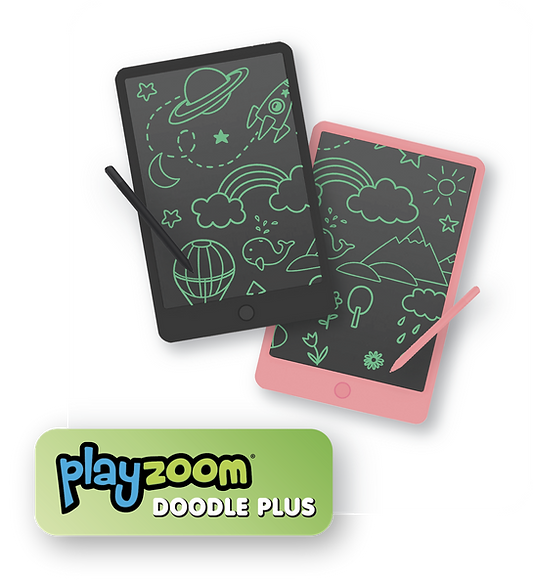
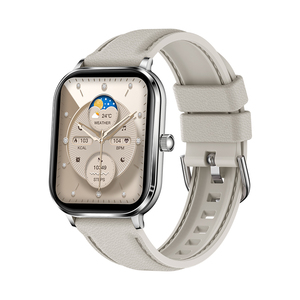
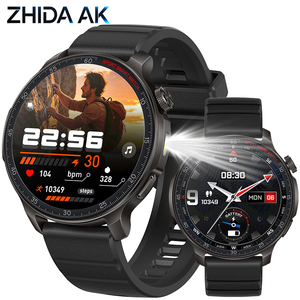
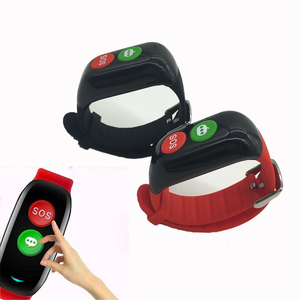
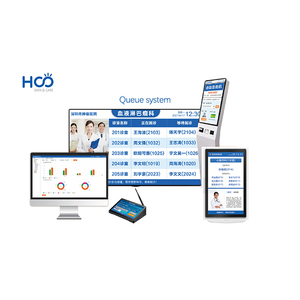
The Greater Tokyo Area, encompassing over 37 million residents and the dense commercial centers of Chiyoda, Minato, Shinjuku, and Shibuya, represents one of the world's most sophisticated markets for stationery and consumer electronics. As Japan aggressively expands its GIGA School Initiative (GIGA スクール構想), educational institutions from primary schools to specialized Juku (cram schools) are prioritizing screen-free, zero-emission writing alternatives that preserve tactile stroke feedback without digital eye strain.
Concurrently, Tokyo’s urban space constraints—characterized by compact residential layouts and streamlined corporate workstations—have accelerated the adoption of ultra-slim LCD writing tablets. Japanese consumers demonstrate a deep-seated cultural reverence for Mottainai (もったいない - zero-waste ethos), making paperless memo pads an ideal alternative to disposable paper note pads. For B2B importers, trading companies, and OEM brand owners sourcing for the Kanto region, partnering with an established writing tablet factory ensures compliance with Japan's rigorous product safety, material purity, and durability expectations.
Our OEM/ODM manufacturing facility integrates cleanroom assembly lines and automated optical testing to ensure every LCD writing tablet meets the exacting quality thresholds expected by Japanese enterprise buyers.
Utilizes zero-power reflective Cholesteric Liquid Crystal Display technology. Ambient illumination renders notes vibrant without backlight glare, blue light emissions, or flicker—safeguarding eye health during extended study sessions.
Engineered with a high-precision pressure curve (100g – 300g trigger force). Supports natural line-weight variations essential for intricate Japanese Kanji characters (such as 鬱 or 議) with crisp stroke differentiation.
Equipped with a replaceable CR2016/CR2025 button cell battery driving over 100,000 instant clearing cycles. Draws zero energy while displaying static notes, guaranteeing 18–24 months of continuous daily utility.
We provide complete technical documentation packs, factory audit reports, and safety certificates needed to clear Tokyo Customs and satisfy retail compliance audits.
| Compliance Category | Certified Standards & Test Frameworks | Operational Scope for Tokyo Import |
|---|---|---|
| Toy & Material Safety | ASTM F963, CPSIA, EN71 (Parts 1-3), EN62115, JIS Z 2801 | Phthalate-free, non-toxic ABS housing; rounded corners certified safe for children ages 3+. |
| Electromagnetic & Wireless | FCC Part 15B, CE-EMC, RoHS 2.0, REACH SVHC, TELEC Ready | Zero radio frequency interference; compliant with Japan Electrical Appliances & Materials Safety Act. |
| Cell & Battery Transport | UN38.3, MSDS, 1.2m Drop Test Certification, IEC 62133 | Pre-cleared documentation for air consolidation to Narita (NRT) and ocean freight to Tokyo/Yokohama Port. |
| Factory Quality Assurance | ISO9001:2015, BSCI Audited, AQL 0.4 Critical / 1.0 Major | 100% in-line pressure calibration, button cycle stress test, optical scratch inspection before shipment. |
Discover how localized LCD writing tablet solutions deliver tangible productivity and sustainability gains across Japanese business and civic environments.
In Tokyo's competitive private tutoring academies (Gakushujuku) and elementary schools, LCD writing tablets are used for rapid arithmetic drills, English vocabulary practice, and Kanji stroke-order repetition. Eliminating chalk dust and paper clutter creates a healthier indoor classroom environment while cutting recurring paper costs by millions of yen annually.
In Tokyo's financial and legal districts (Marunouchi, Otemachi), financial institutions and ward offices (Kuyakusho) utilize custom-branded writing tablets at customer service desks. Visitors complete temporary form verifications or write confidential notes that are destroyed instantly with a single button press—supporting strict compliance with Japan’s Act on the Protection of Personal Information (APPI).
Tokyo’s healthcare network relies on lightweight LCD memo boards for silent, clear communication between nursing staff, audiologists, and speech-impaired seniors in rehabilitation wards across Tokyo Prefecture. High-contrast display surfaces ensure readability even for patients with reduced visual acuity.
Within fulfillment centers along the Tokyo Bay logistics corridor (Koto, Ota wards), operators use ruggedized LCD tablets for dynamic order picking, temporary inventory tallies, and dispatch notes. Built-in stylus dock clips and drop-resistant housings withstand industrial daily use.
We provide complete private-label support to transform standard writing tablet hardware into bespoke product lines ready for immediate retail distribution throughout Japan.
Precision color matching for housings and stylus bodies to match Japanese brand guidelines, accompanied by high-resolution silk-screen or laser-etched corporate logos.
Complete packaging development including 4-color offset printed window boxes, Japanese-language user manuals, JAN barcode integration, and recycling mark compliance (Plamark / Papermark).
3D-rendered structural samples delivered in 72 hours, with functional engineering samples dispatched to Tokyo via express air courier within 5 business days.
Our standard MOQ for baseline customized packaging and logo branding starts at 1,000 units per SKU. For custom housing colors or specialized mold modifications, MOQ starts at 3,000 units. We also maintain buffer stock of neutral-packaged inventory to support smaller test orders starting at 500 units for new market trials in Japan.
All plastic resins (ABS/PC) and stylus inks undergo third-party laboratory testing to verify compliance with heavy metal limits under ASTM F963, EN71-3, and Japan's Food Sanitation Act guidelines (where applicable for children's products). Test reports are renewed annually by accredited testing agencies such as SGS, TÜV, or Intertek.
Yes. Our in-house graphic design team works directly with your brand guidelines to produce fully localized Japanese packaging, including proper JAN barcode placement, Japanese warning labels, compliant recycling symbols, and clear user instructions translated by native speakers.
Mass production lead time is typically 15–20 days following sample approval and deposit confirmation. Ocean transit to Tokyo/Yokohama Port takes approximately 4–7 days depending on the vessel routing, while air freight to Narita (NRT) or Haneda (HND) takes 1–3 days, facilitating rapid inventory replenishment.
Every unit undergoes 100% automated optical screen testing to verify background contrast ratio, stroke brightness, and edge-to-edge clearing uniformity. Erase micro-switches are rated for 100,000+ mechanical actuations, and every shipment follows AQL 0.4 Critical / 1.0 Major inspection protocols with photographic QC reports provided before dispatch.
Elevate your product line with certified, high-margin LCD writing tablets and OEM smart electronics. Connect directly with our engineering team for competitive factory pricing, custom prototyping, and complete export support.
Inquire Now